Table of Contents
Truck Tablet vs Vehicle Tablet — What’s the Difference?
In the expanding market of mobile computing for transportation, the terms "truck tablet" and "vehicle tablet" are often used interchangeably, creating confusion for fleet managers and system integrators. However, these devices represent distinct categories with specific engineering requirements and operational characteristics. Understanding the difference between truck tablet and vehicle tablet is crucial for selecting the right technology that aligns with your operational needs, environmental conditions, and long-term reliability expectations. This comprehensive analysis explores the technical, environmental, and functional distinctions between these two categories of mobile computing platforms, as many fleets are now deploying truck tablets to improve dispatch efficiency.
Introduction: Understanding the Terminology
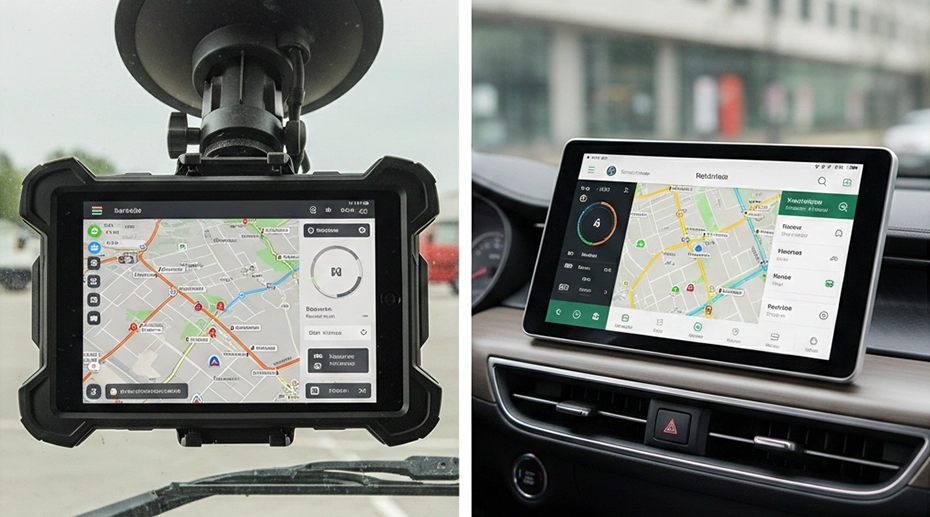
Before examining technical specifications, it's important to establish clear definitions. A "vehicle tablet" is a broad category encompassing computing devices designed for use in various types of vehicles, including passenger cars, vans, light commercial vehicles, and service vehicles. In contrast, a "truck tablet" or truck-mounted tablet refers specifically to devices engineered for the demanding environment of heavy-duty commercial trucks, tractor-trailers, construction equipment, and specialized utility vehicles. This distinction goes beyond mere semantics—it reflects fundamental differences in design philosophy, component selection, and testing standards that directly impact performance and longevity in specific operational contexts.
1. Operational Environment and Use Cases
The most fundamental distinction between these device categories lies in their intended operational environments. This difference drives virtually every aspect of their design, from component selection to enclosure construction.
Truck Tablet: Engineered for Heavy-Duty Commercial Operations
Truck tablets are designed specifically for heavy-duty trucks operating in commercial, industrial, and logistical environments. These devices face unique challenges:
• Extended Operational Hours: Commercial trucks often operate 12-18 hours daily, requiring continuous computing availability without performance degradation.
• Harsh Environmental Exposure: Devices must withstand exposure to diesel exhaust, road salts, hydraulic fluids, and construction site dust.
• Professional Fleet Integration: Systems integrate with complex fleet management software, electronic logging devices (ELD), telematics platforms, and dispatch systems.
• Driver-Vehicle Interface: Tablets serve as primary interfaces for navigation, load documentation, hours-of-service tracking, and vehicle diagnostics.
Typical Applications:
• Long-haul freight and logistics operations
• Construction and heavy equipment fleets
• Waste management and refuse collection vehicles
• Utility service and maintenance trucks
• Agricultural and mining equipment
• Emergency response and specialized service vehicles
Vehicle Tablet: Versatile Solutions for Multiple Vehicle Types
Vehicle tablets are designed for multi-vehicle applications across a broader range of transportation contexts:
• Varied Environmental Conditions: While durable, they typically encounter less extreme conditions than commercial truck environments.
• Shorter Operational Cycles: Often used in vehicles with more varied schedules and shorter daily operating hours.
• Consumer-to-Professional Spectrum: May range from enhanced consumer devices to semi-rugged professional tools.
• General Purpose Functionality: Often used for navigation, basic communication, and information access rather than specialized fleet management.
Typical Applications:
• Sales and service fleets (passenger vehicles and vans)
• Ride-sharing and taxi services
• Delivery and courier services using light commercial vehicles
• Field service technicians with company vehicles
• Government and municipal vehicle fleets
• Rental car and vehicle sharing platforms
2. Power System and Electrical Integration
The electrical requirements and power management systems represent one of the most critical technical distinctions between these device categories. Commercial truck electrical systems present unique challenges that demand specialized engineering.
Truck Tablet Power Architecture
A professional truck tablet solution requires robust power management capable of handling the electrical anomalies common in heavy-duty vehicles:
• Wide Voltage Input Range (9–36V): Must accommodate voltage fluctuations from engine cranking (below 9V) to load dump spikes (over 30V).
• Ignition Sensing Capability: Automatically powers on/off with the vehicle, preventing parasitic battery drain during extended downtime.
• Advanced Power Protection: Integrated protection against reverse polarity, voltage transients, electromagnetic interference, and alternator ripple.
• Hot-Swap Functionality: Seamless transition between vehicle power and internal battery without system interruption.
• Heavy-Duty Connectors: Industrial-grade power connectors that withstand vibration and repeated connection cycles.
Electrical System Considerations:
Commercial trucks typically operate on 12V or 24V electrical systems with substantial current capacity. The tablet's power supply must not only handle these voltages but also filter out the electrical noise generated by various vehicle systems—starter motors, alternators, lighting systems, and auxiliary equipment. This requires sophisticated filtering circuits and voltage regulation that go beyond what standard vehicle tablets provide.
Vehicle Tablet Power Requirements
Vehicle tablet solutions typically feature simpler power architectures suited to more stable electrical environments:
• Standard Voltage Ranges: Usually designed for 12V automotive systems with less extreme voltage variations.
• Basic Power Protection: May include fundamental surge protection but often lacks comprehensive load dump and transient protection.
• Simplified Power Management: May rely on manual power control or basic automatic switching rather than intelligent ignition sensing.
• Consumer-Grade Connectors: Often use standard automotive connectors (cigarette lighter plugs) rather than hardwired industrial connections.
• Limited Hot-Swap Capability: May reboot or experience data interruption when switching between power sources.
3. Hardware Connectivity and I/O Capabilities
The input/output (I/O) capabilities represent another key distinction, reflecting the different levels of system integration required in various operational contexts. This is where the truck-mounted tablet vs vehicle tablet comparison becomes particularly evident in practical application.
Truck Tablet I/O Portfolio
A comprehensive truck tablet solution offers extensive connectivity options for deep vehicle integration:
• Camera Integration: Direct support for multiple camera inputs (rear-view, side-view, in-cabin) with hardware-accelerated video encoding.
• CAN Bus Interface (SAE J1939): Direct connection to the vehicle's Controller Area Network for real-time diagnostics, fuel monitoring, and performance data.
• Industrial Serial Ports (RS232/RS485): Support for legacy equipment, scales, RFID readers, and specialized sensors.
• Digital I/O (GPIO): For monitoring vehicle events (door open/close, PTO engagement) and controlling external devices.
• Automotive Ethernet: Support for high-speed data networks in modern commercial vehicles.
• Specialized Vehicle Connectors: Industry-standard connectors for seamless integration with existing vehicle systems.
In a commercial trucking application, a tablet might simultaneously:
1. Monitor engine parameters via CAN Bus (RPM, fuel rate, temperatures)
2. Record video from three camera channels (forward, cabin, rear)
3. Interface with an electronic logging device for hours compliance
4. Connect to a weight sensor via RS232 for load verification
5. Control an external printer via USB for documentation
This level of integration requires specialized hardware interfaces not typically found in general vehicle tablets.
Vehicle Tablet I/O Configuration
Vehicle tablet solutions generally offer more limited connectivity focused on general-purpose functionality:
• Standard USB Ports: For connecting peripherals like GPS receivers, barcode scanners, or storage devices.
• Basic Bluetooth and Wi-Fi: For connecting to mobile devices, printers, and wireless networks.
• Consumer Camera Support: May support basic USB webcams but lack multi-channel hardware encoding.
• Limited Vehicle Integration: Typically rely on OBD-II adapters for vehicle data rather than direct CAN Bus integration.
• General-Purpose I/O: Focus on standard connectivity rather than specialized industrial interfaces.
• Simplified Expansion: May support basic accessories but lack comprehensive integration capabilities.
Selection Criteria for Different Applications
Choosing between a truck tablet and a vehicle tablet requires careful consideration of your specific operational requirements. The decision should be based on technical requirements rather than price alone, as selecting an inadequate solution can lead to higher long-term costs through increased downtime and premature device failure.
When a Truck Tablet is Essential:
• Operations involving heavy-duty commercial vehicles (Class 6-8 trucks)
• Environments with extreme vibration and temperature variations
• Applications requiring deep vehicle system integration (CAN Bus, J1939)
• Fleets operating in harsh conditions (construction, mining, logging)
• Systems requiring 24/7 availability and hot-swap capabilities
• Operations where device failure would cause significant operational disruption
When a Vehicle Tablet May Suffice:
• Light commercial vehicles and passenger car fleets
• Environments with moderate conditions and predictable usage patterns
• Applications requiring basic navigation and communication functions
• Operations with shorter daily operating hours and regular vehicle returns
• Systems where basic OBD-II connectivity meets data requirements
• Budget-conscious deployments where extreme durability is less critical
Technical Specifications Comparison Table
| Technical Dimension | Truck Tablet | Vehicle Tablet |
|---|---|---|
| Primary Usage | Heavy-duty trucks and commercial vehicles | Multi-vehicle types including passenger cars |
| Power Input Range | 9–36V DC with ignition sensing | Typically 12V, often lighter protection |
| I/O Capabilities | Camera, CAN, RS232, GPIO, Automotive Ethernet | Limited, primarily USB and Bluetooth |
| Vibration Resistance | MIL-STD-810G/H, vehicle-specific profiles | Basic transportation testing |
| Temperature Range | -30°C to 70°C (operational) | 0°C to 50°C (typical) |
| Ingress Protection | IP65 minimum, often IP67 | IP54 or similar |
| Mounting System | Vehicle-specific, vibration-dampened | Generic or adjustable mounts |
| Product Lifecycle | 5-7 years minimum support | 2-3 years typical |
Implementation Considerations
When implementing either a truck tablet solution or a vehicle tablet solution, several practical considerations extend beyond the hardware specifications:
Integration Complexity:
Truck tablets typically require more sophisticated installation due to their deeper vehicle integration. This may involve connecting to the vehicle's CAN Bus system, installing additional sensors, and configuring specialized software interfaces. Vehicle tablets generally offer simpler plug-and-play installation with fewer integration requirements.
Total Cost of Ownership:
While truck tablets typically have higher initial costs, their total cost of ownership may be lower for commercial applications due to longer service life, reduced failure rates, and less frequent replacement needs. Vehicle tablets may offer lower upfront costs but potentially higher long-term expenses if deployed in environments beyond their design specifications.
Future-Proofing Considerations:
Consider how your fleet's needs might evolve. A solution that meets current requirements may become inadequate as operations expand, vehicles are upgraded, or regulatory requirements change. Both truck tablet and android fleet tablet solutions should be evaluated for their ability to adapt to future requirements through software updates, hardware expansion, and compatibility with emerging standards.
In conclusion, understanding the difference between truck tablet and vehicle tablet is essential for making informed technology decisions in transportation and logistics. The distinction goes beyond terminology to encompass fundamental differences in engineering, durability, integration capabilities, and operational suitability. By carefully evaluating your specific requirements against these technical distinctions, you can select the appropriate computing platform that delivers reliable performance, appropriate functionality, and optimal long-term value for your mobile operations.