Industrial Tablet Explained: Design, Certifications, and Real-World Applications
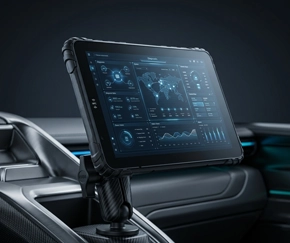
Purpose-built computing platforms engineered for reliable, long-term deployment in demanding environments — not consumer devices with rugged cases.
Article Navigation
What Is an Industrial Tablet?
An industrial tablet is a purpose-built mobile computing device engineered for reliable operation in demanding industrial environments, designed for long-term deployment rather than consumer use. Unlike consumer tablets, industrial rugged tablets prioritize reliability, connectivity, and integration capabilities for mission-critical operations.
Core Definition
Industrial tablets are computing platforms optimized for vehicle-mounted and fixed installations with emphasis on environmental tolerance, system stability, and long lifecycle availability — typically 5-7 years versus 1-2 years for consumer devices.
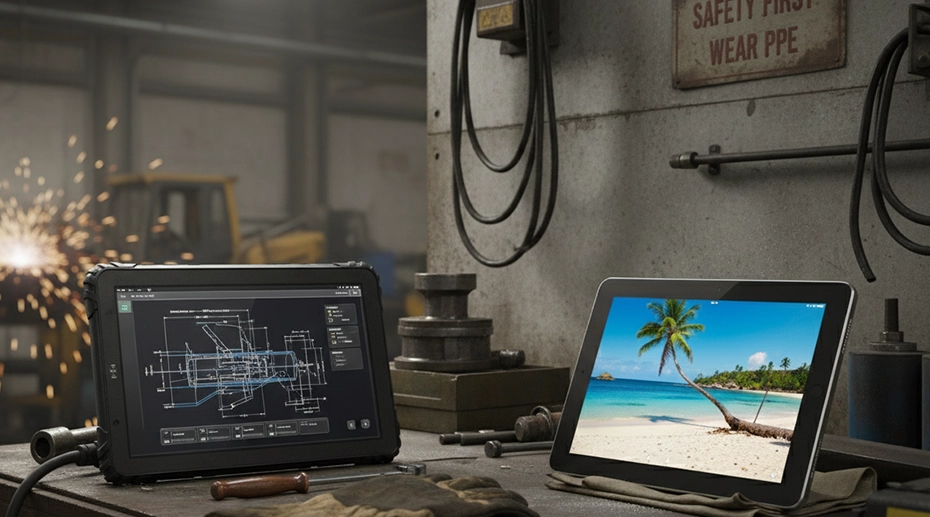
Industrial Tablet vs Consumer Tablet: Key Differences
Design & Mechanical Structure
Reinforced magnesium or polycarbonate housings with internal shock mounting vs slim designs with minimal protection.
Environmental Resistance
Certified for -20°C to 60°C, high vibration, dust, and moisture (IP65-IP68) vs indoor-only operation.
System Stability & Lifecycle
5-7 year product lifecycles with controlled OS updates vs 1-2 year effective lifespans with disruptive updates.
Mounting & Peripheral Integration
Dedicated mounting points, docking connectors, expanded I/O (RS232/485, GPIO, CAN bus) vs USB-only ports.
Key Design Characteristics of Industrial Tablets
Rugged Housing & Mechanical Protection
Reinforced corners, raised bezels, and internal shock isolation to withstand repeated impacts and vibrations.
Industrial-Grade Display & Touch
800-1000+ nits brightness, anti-reflective coatings, glove/wet touch capability for outdoor visibility.
Extended I/O & Expansion
RS232/485, GPIO, CAN bus, and proprietary docking systems for specialized peripherals.
Power Design for Continuous Operation
24/7 operation with ignition sensing, hot-swappable batteries, and intelligent charging circuits.
Industrial Certifications & Standards Explained
IP Ratings (IP65 / IP67 / IP68)
IP65: Dust-tight and protected against water jets from any direction
IP67: Dust-tight and protected against temporary immersion (up to 1m for 30 minutes)
IP68: Dust-tight and protected against continuous immersion under specified conditions
For applications requiring water resistance, explore waterproof rugged tablet solutions →
MIL-STD-810
Drop resistance from 4-6 feet onto concrete
Shock and vibration tolerance equivalent to vehicle/machinery environments
Temperature shock and altitude testing
Humidity and fungus resistance
Operating Systems Used in Industrial Tablets
Why Android Dominates Industrial Tablets
Open ecosystem enabling hardware and software customization
Long-term support versions (Android Enterprise Recommended)
Lower total cost of ownership compared to Windows licensing
Robust MDM and enterprise security features
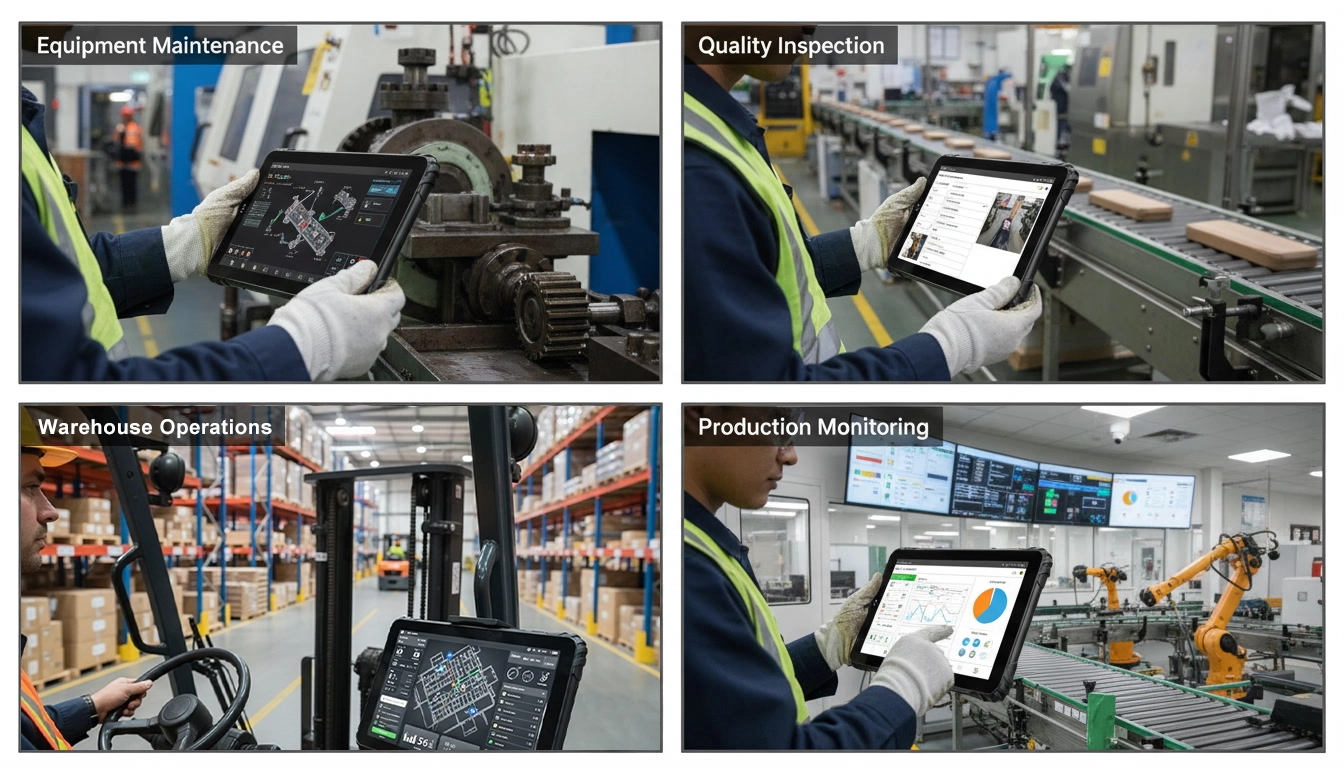
Common Applications of Industrial Tablets
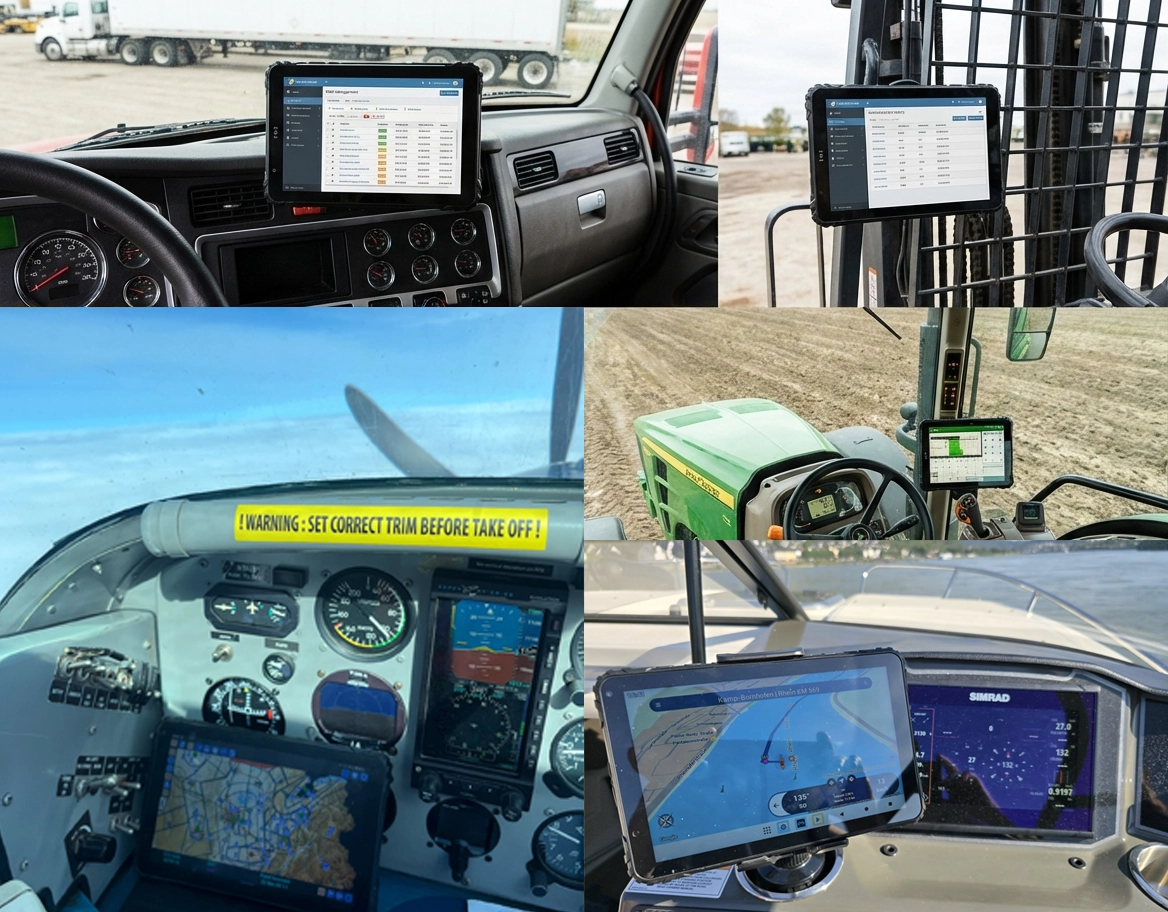
Construction & Heavy Equipment
Equipment monitoring, site management, field documentation
Explore Solutions →Public Safety & Field Services
Emergency response, utility maintenance, inspection reporting
Explore Solutions →Industrial Tablet vs Mobile Data Terminal (MDT)
Industrial Tablets
General-purpose computing devices adapted for harsh environments with full OS capabilities and application flexibility.
Mobile Data Terminals
Specialized terminals focused on dispatch, messaging, and form-based data entry. Explore MDT solutions →
The line between tablets and MDTs is blurring as modern industrial tablets incorporate traditional MDT functions while offering greater flexibility.
How to Choose an Industrial Tablet for Your Application
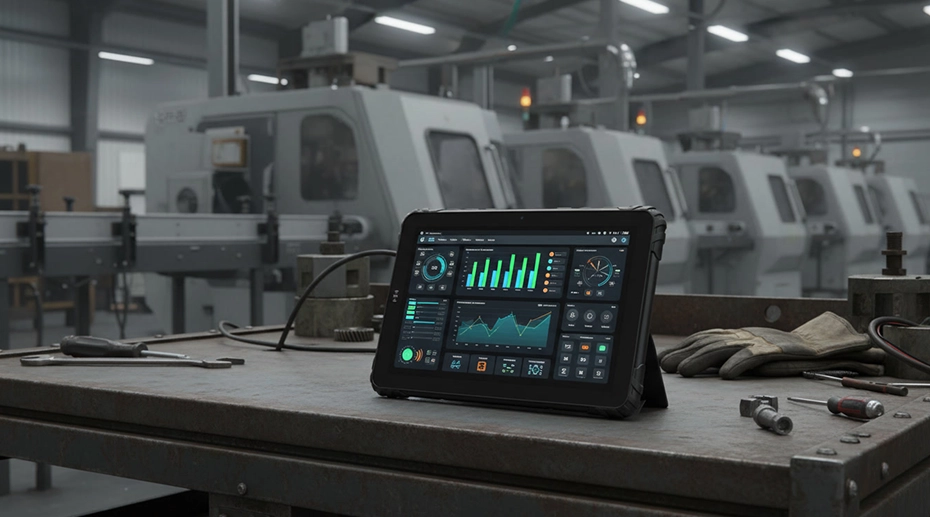
Environment & Installation
Temperature extremes, moisture/dust, vibration levels, mounting requirements.
Performance & Connectivity
Processing power, display visibility, LTE/Wi-Fi/GNSS, peripheral interfaces.
Lifecycle & OEM Support
Product availability, OS support, customization options. Explore OEM →
Industrial Tablet Trends: What's Next?
Android Dominance: Continued growth as the primary OS for industrial mobility with extended enterprise features.
Vehicle-Centric Design: Tablets engineered for vehicle integration with CAN bus, ignition sensing, and automotive-grade components.
Advanced MDM & Remote Management: Cloud-based device management, predictive maintenance, and OTA configuration.
Edge AI Integration: On-device machine learning for real-time analytics and predictive maintenance.
Industrial tablets are purpose-built computing platforms designed for long-term, mission-critical deployment in demanding environments — not consumer devices with rugged cases. For system integrators and industrial solution providers, TOPICON industrial tablets serve as an OEM hardware platform — configurable with custom I/O, private labeling, and pre-loaded software. Explore OEM customization options →
Related Industrial Tablet Resources