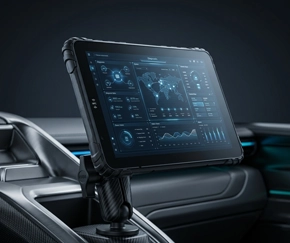
ELD Compliance: Why Rugged Tablets Matter for Fleet Operations
Electronic Logging Devices are now mandatory for commercial fleets across North America. The hardware you choose to run ELD software determines whether your fleet passes inspections — or faces fines, out-of-service orders, and compliance gaps.
Introduction
Electronic Logging Devices (ELD) have become a mandatory requirement for commercial vehicle operations in many regions, including the United States under FMCSA regulations. Fleets must deploy reliable hardware to run ELD software that tracks hours of service, vehicle movement, and driver activity.
Rugged tablets provide a stable and durable hardware platform for ELD applications used in commercial fleets. Unlike consumer devices, ELD tablets are engineered to withstand the vibration, temperature extremes, and continuous operation required in vehicle environments.
Many fleets deploy vehicle-mounted rugged tablets to run ELD applications and fleet management software.
What Is ELD Compliance?
ELD compliance refers to the requirement for commercial motor carriers to use electronic logging devices that automatically record driver hours of service (HOS). These devices connect to the vehicle's engine control unit (ECU) via the OBD-II port or CAN bus to capture engine hours, vehicle movement, and driving time.
The Federal Motor Carrier Safety Administration (FMCSA) mandates ELD usage to ensure accurate HOS records, improve road safety, and simplify enforcement for inspectors. ELD systems must meet technical standards for data recording, transfer, and security.

Key ELD functions: automatic driving time recording, vehicle data synchronization, driver log management, and tamper-resistant data storage.
Why ELD Compliance Matters for Fleet Operators
Accurate HOS Tracking
ELD systems automatically record driving time, engine hours, and vehicle movement, eliminating manual errors.
Improved Safety
By preventing drivers from exceeding legal driving limits, ELDs help reduce fatigue-related accidents.
Regulatory Compliance
FMCSA requires ELD compliance for most commercial fleets. Non-compliance can result in fines and out-of-service orders.
Better Fleet Visibility
Fleet managers gain real-time visibility into driver status, vehicle location, and compliance data.

Hardware Challenges in ELD Deployment
Consumer Tablets Are Not Designed for Vehicles
Consumer-grade tablets fail frequently due to continuous vibration, high cabin temperatures, and long operating hours — leading to data loss and compliance gaps.
Device Mounting and Power Supply
Standard tablets lack professional vehicle docking systems with ignition sensing and continuous power — resulting in loose connections and dead batteries.
Connectivity Issues
ELD applications require reliable LTE, GPS, and Bluetooth or wired connections to the vehicle's OBD port — consumer devices struggle in mobile environments.
The Real Risk: Your ELD Tablet Is the Single Point of Failure
In electronic logging, there's no paper backup. If your tablet fails during an inspection, compliance stops — and so does your fleet.

Roadside Inspections
A frozen screen or dead battery means failure to produce HOS records — triggering fines and out-of-service orders.

Missing HOS Records
If the tablet crashes mid-route, driving time goes unrecorded — gaps are red flags during audits.
Power & Connection Failures
Consumer tablets lose charge mid-shift. In ELD, a dead device doesn't just stop entertainment — it stops compliance.
Why it matters: A consumer tablet that dies during a route costs far more than a rugged ELD tablet — in fines, audit exposure, and CSA score damage. Explore ELD-ready tablets →
Why Rugged Tablets Are Ideal for ELD Applications
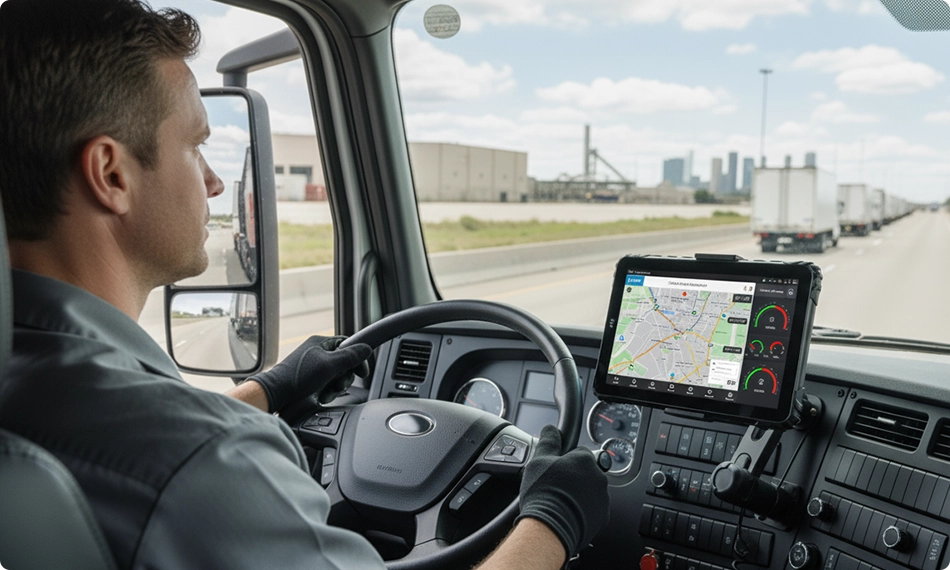
Durable for Vehicle Environments
IP67-rated protection against dust and water, MIL-STD-810G/H shock resistance, and wide temperature operation (-20°C to 60°C).
Designed for Vehicle Mounting
Professional docking cradles with ignition sensing, continuous power, and secure mounting for vibration-heavy environments. Explore vehicle mount tablets →
Reliable Connectivity + Vehicle Integration
Integrated 4G/5G LTE, GPS, and Bluetooth for seamless connection to ELD software and vehicle data sources. MDT865 supports CAN bus for direct engine data capture. Explore CAN Bus solutions →
Long-Term Fleet Deployment
MDM support for remote management, OTA updates, and consistent performance across mixed fleets with 5-7 year lifecycles.
In modern fleet systems, rugged tablets function as ELD tablets used for hours of service tracking, driver logs, and compliance management.
Common Use Cases of Rugged Tablets with ELD Systems
Truck Fleet Management
Long-haul and regional trucks use rugged tablets with ELD apps for HOS tracking, navigation, and dispatch.
Last-Mile Delivery
Delivery vehicles combine ELD compliance with route optimization and proof of delivery. Explore delivery driver tablets →
Bus and Passenger Transport
Public transit and school buses deploy rugged tablets for driver logs, route tracking, and passenger information.
Construction and Utility Vehicles
Heavy equipment fleets use rugged tablets for ELD compliance, equipment monitoring, and field reporting. Explore construction tablets →
Choosing the Right Rugged Tablet for ELD Solutions

When selecting a rugged tablet for ELD applications, consider these essential features:
Explore our Transportation Tablet solutions designed for vehicle-mounted fleet deployments with ELD software compatibility.
Deploying ELD Tablets Across Your Fleet?
Rugged tablets provide a durable and reliable platform for ELD software — with vehicle-grade durability, professional docking, and enterprise connectivity that consumer devices cannot match.
Related ELD & Fleet Hardware Resources