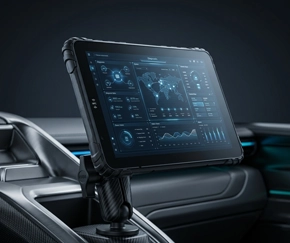
Rugged Truck Tablets for Fleet Management, ELD & Telematics
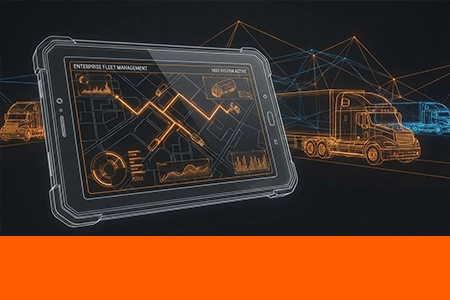
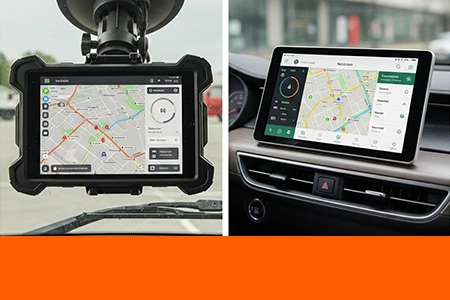
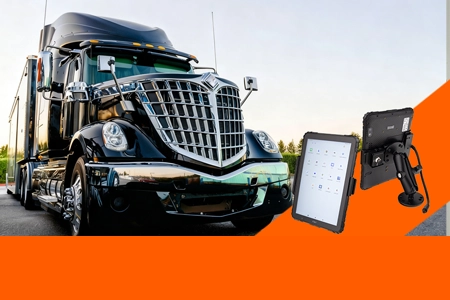
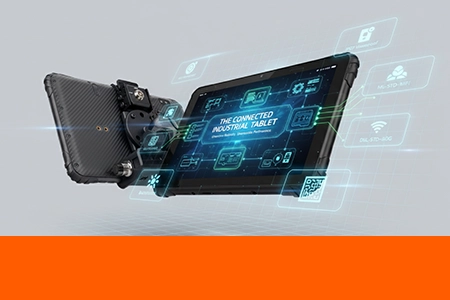
Rugged vehicle-mounted Android tablets designed for commercial trucks — supporting fleet telematics, ELD compliance, real-time dispatch, and OEM hardware customization for system integrators. These in-vehicle terminals serve as the driver's primary interface for every operational workflow.
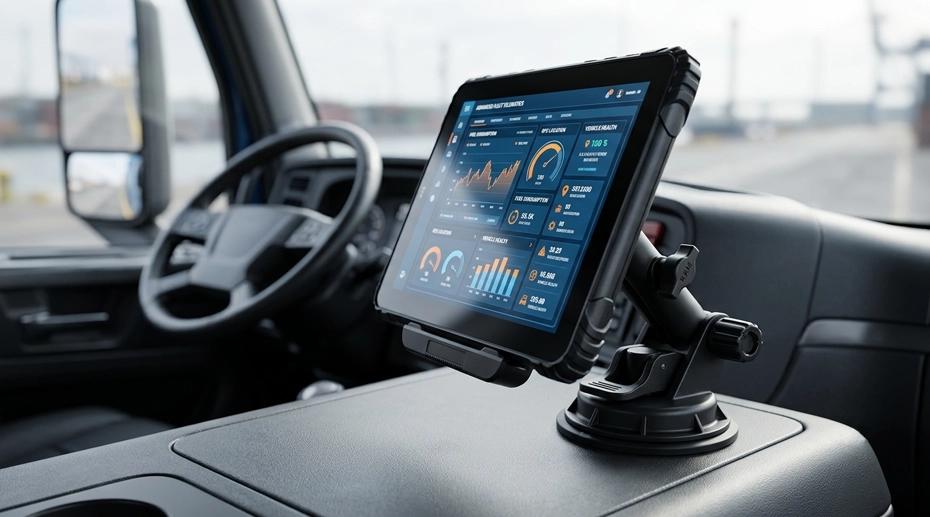

Table of Contents
1. Truck Tablet Use Cases: Fleet, ELD & Telematics
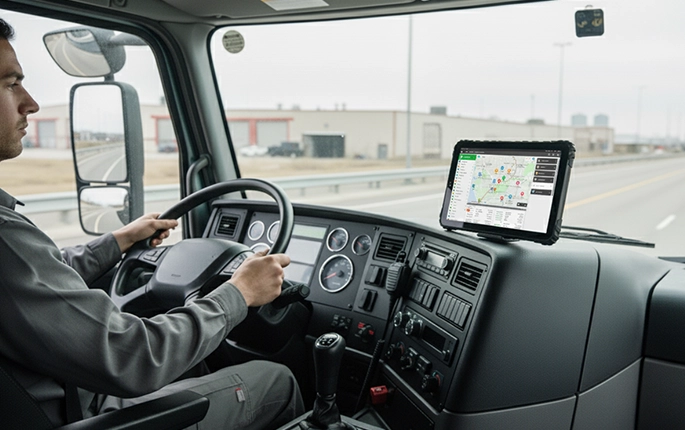
Fleet Management & Telematics
Real-time vehicle tracking, fuel monitoring, maintenance scheduling, and driver performance analytics — all managed through a single fleet management tablet →
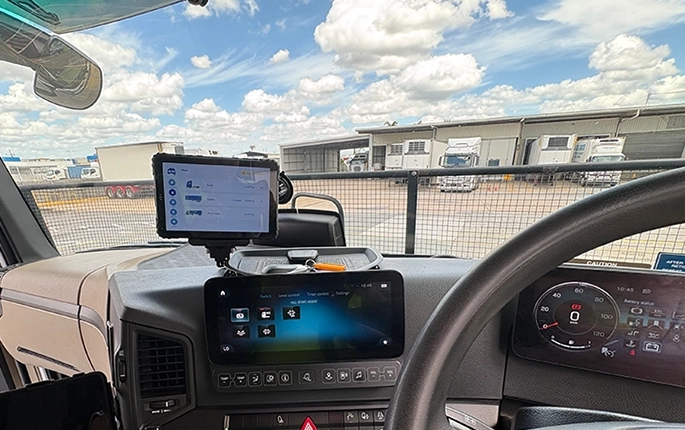
ELD Compliance & HOS Tracking
Automatic Hours of Service recording, driver log management, and FMCSA-compliant reporting — transforming the tablet into a dedicated ELD tablet →
US fleets: FMCSA ELD hardware requirements →
EU fleets: EU 165/2014 walkaround compliance →
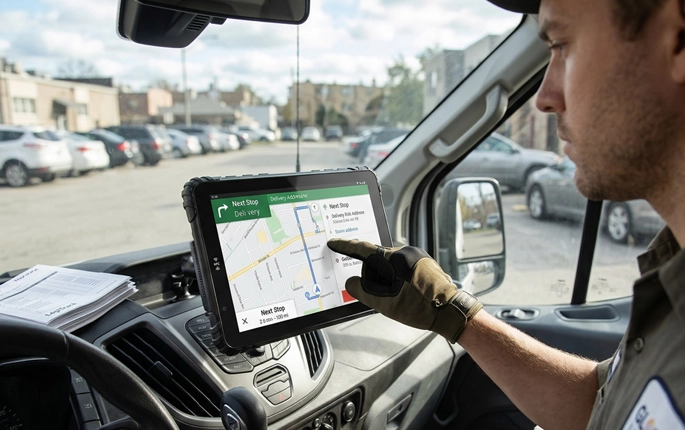
Dispatch & Route Navigation
Real-time dispatch assignments →, truck-specific GPS navigation, and dynamic re-routing. The device becomes the mobile dispatch panel that replaces radio calls with digital task flows.
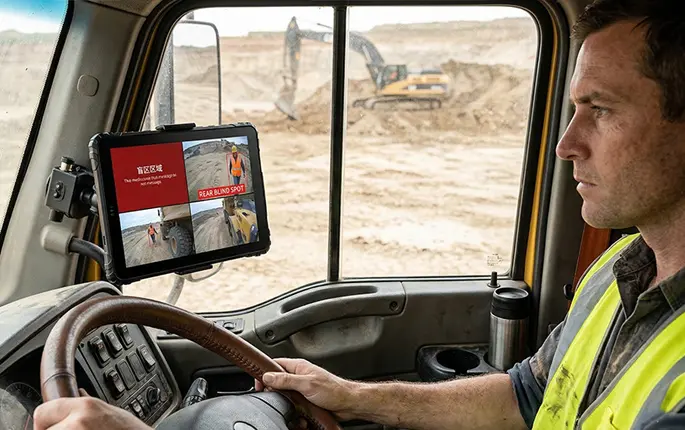
Driver Safety & Camera Integration
Multi-camera input with AI-based collision warnings and driver behavior alerts. Deploy vehicle camera systems →
2. Why Consumer Tablets Fail in Truck Environments
3. The Real Risk: Your Truck Tablet Is the Single Point of Failure
In modern trucking, every critical function runs through one device. If it fails, there's no paper fallback.

ELD Compliance Stops
HOS logs stop recording. One device failure during an inspection triggers fines and out-of-service orders. That's why a rugged hours-of-service recorder with MIL-STD-810H certification is non-negotiable.

Dispatch Goes Dark
Route updates stop. Drivers lose contact. Delivery ETAs become guesses.

Vehicle Diagnostics Fail
Engine faults go undetected. Minor issues become major breakdowns.
Why it matters: A consumer tablet that fails during a route costs far more than a rugged truck tablet — in missed deliveries, compliance violations, and fleet downtime.
4. Key Features of a Vehicle-Mounted Fleet Tablet
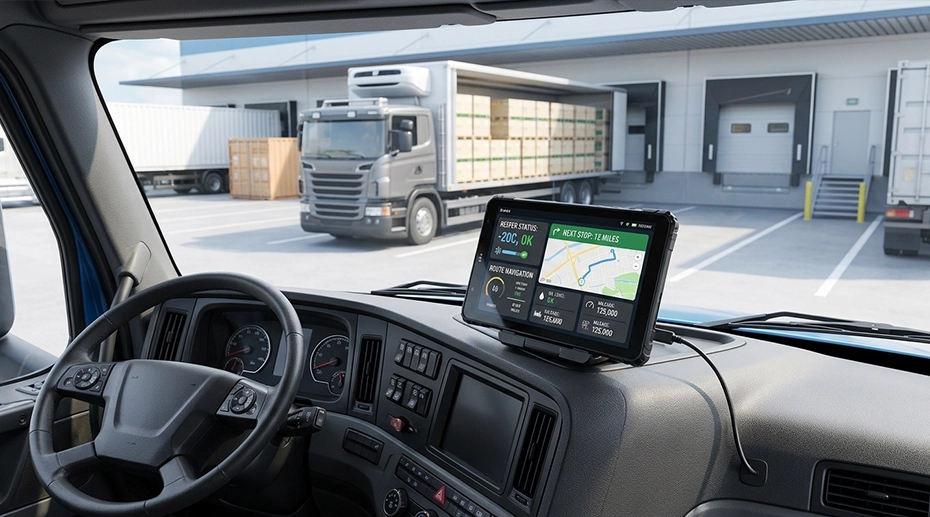
5. Truck Tablet OEM for Fleet Solution Providers
As an OEM truck tablet manufacturer, TOPICON provides deep customization for fleet telematics providers, system integrators, and ELD solution companies. Our OEM vehicle computing base can be tailored with custom I/O, branding, and software pre-loading to match your deployment requirements.
6. Fleet-Wide Remote Management Built In
Every truck tablet connects to the TOPICON MDM platform — hosted on TOPICON's infrastructure, accessed through a standard web browser. Remote screen control for troubleshooting without calling the driver. Batch OTA firmware updates with WiFi-enforced download and wake-from-off upgrade. Dynamic Setting Sync that clones one tablet's configuration to the entire fleet in one operation.
Explore the MDM platform →7. Recommended Truck Tablets for Fleet Deployment
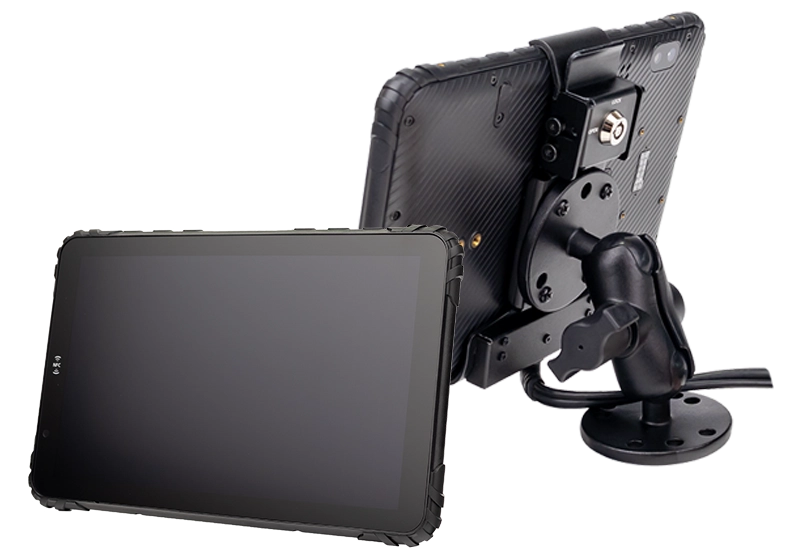
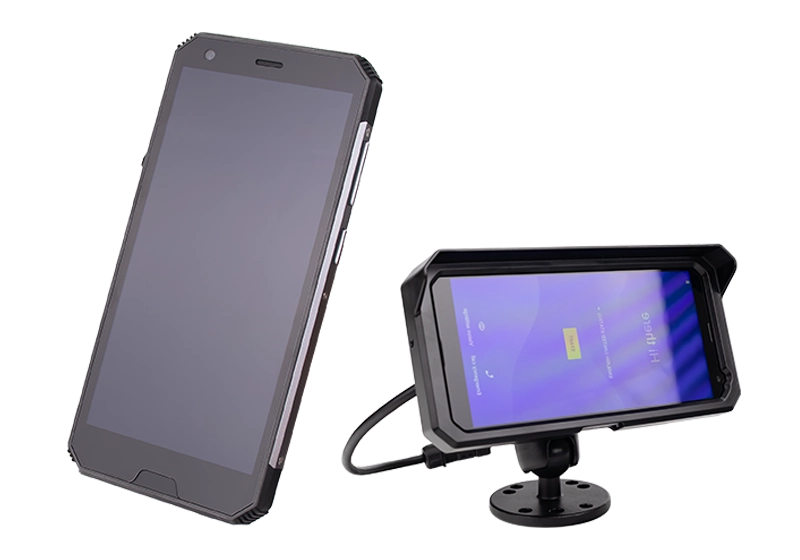
MDT865 – 8" Rugged Truck Tablet
IP67, MIL-STD-810G, 1000-nit, CAN bus, vehicle docking. View MDT865 Specs →
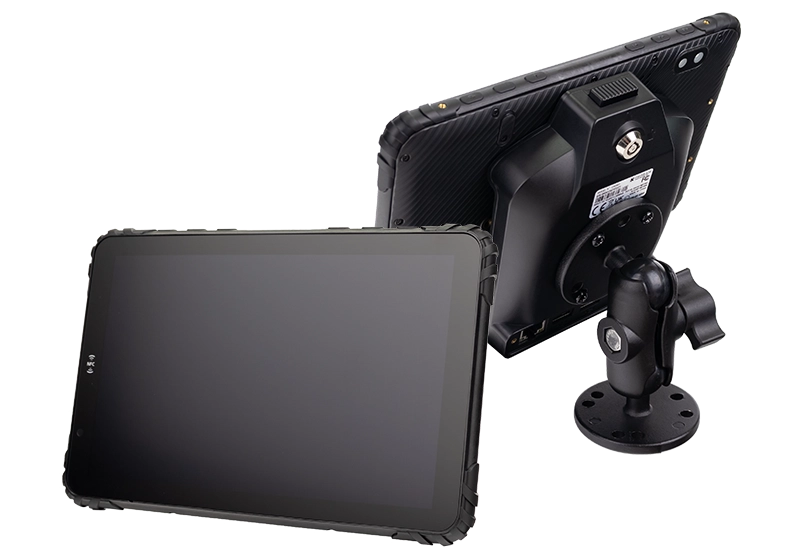
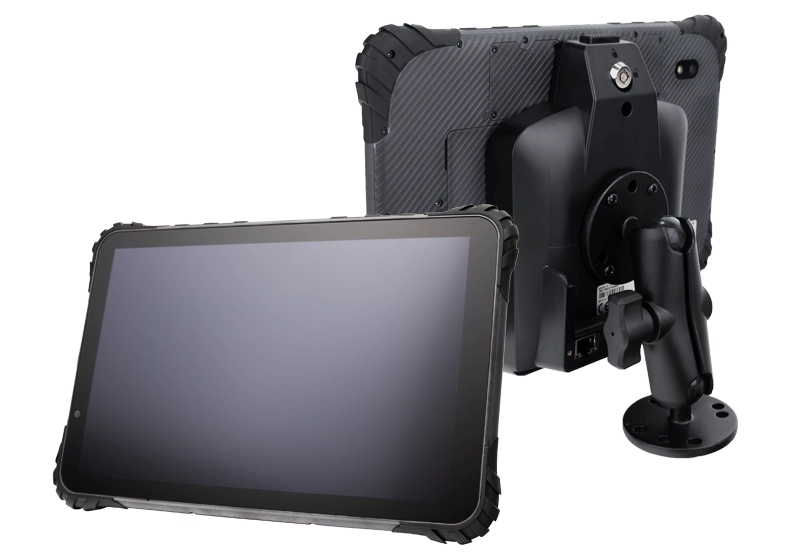
8. How to Choose the Right Truck Tablet
9. New to Truck Tablets?
Read our complete introduction: What Is a Truck Tablet? A Complete Guide for Fleet Managers →
Need a Custom Truck Tablet for Your Fleet?
Get purpose-built rugged tablets with ELD support, telematics integration, and OEM customization for your commercial truck fleet.
10. Truck Tablet FAQ
What is the difference between a truck tablet and a consumer tablet?
Consumer tablets fail in truck cabs due to vibration, temperature extremes, sunlight washing out the display, and 5V USB power that drains the battery. A truck tablet is MIL-STD-810G/H certified for sustained vibration, sealed to IP67, powered by 9-36V ignition-sensed vehicle power, and has a 1000-nit sunlight-readable display.
Can a truck tablet be removed from its dock for walkaround inspections?
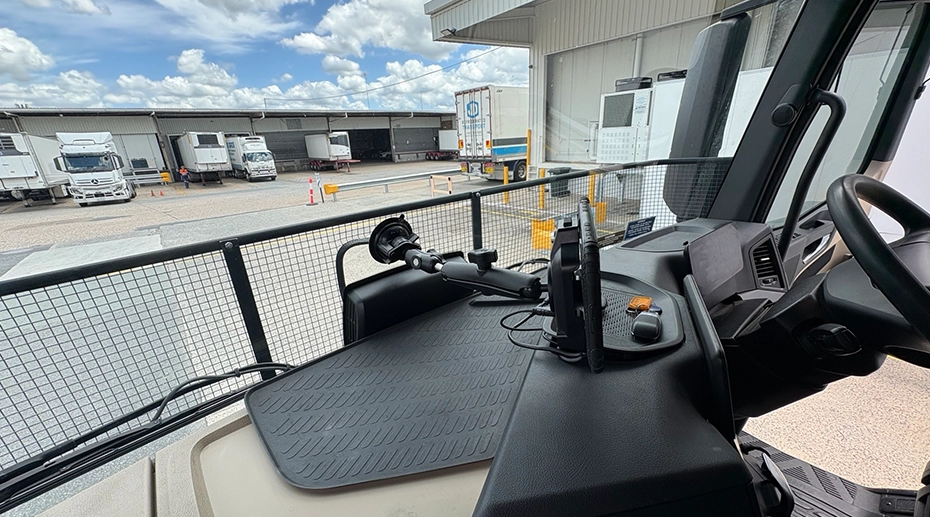
Yes. The vehicle mount tablet platform with one-hand quick-release allows the driver to undock in one second for pre-trip inspections, proof-of-delivery capture, or shift handover, then re-dock when back in the cab. The dock remains bolted to the vehicle. The tablet follows the driver.
What screen brightness is needed for truck cab use?
700-1000 nits with anti-glare treatment is the minimum for practical in-cab readability. Below this, direct sunlight through the windshield washes out the display, forcing the driver to lean forward and squint — a distraction that becomes a safety issue. Optical bonding improves contrast further by reducing internal reflection.
Can the same tablet work across different trucks in a fleet?
Yes. The 1:N dock architecture allows one tablet to serve multiple vehicles. Docks are installed on every truck, and the driver carries their tablet to whichever vehicle they are assigned. This reduces hardware procurement by 30-50% for seasonal, shared, and mixed-utilisation fleets.
Does the tablet support ELD apps from different providers?
Yes. The tablet runs standard Android OS, which supports any FMCSA-registered ELD application. The TOPICON MDM platform enforces kiosk mode to lock the device to the ELD app, preventing the driver from closing it or accessing unauthorized settings.
Explore Related Fleet Hardware
TOPICON — OEM Truck Tablet Manufacturer | Vehicle-Mounted Fleet Solutions