CAN Bus vs RS232: Which Communication Protocol Is Best for Vehicle Telematics Systems?
Modern fleet and logistics systems rely heavily on reliable in-vehicle communication. Understanding how CAN Bus and RS232 serve different roles is essential when designing or selecting a vehicle-mounted terminal — especially as telematics demands grow and legacy peripherals still need support.
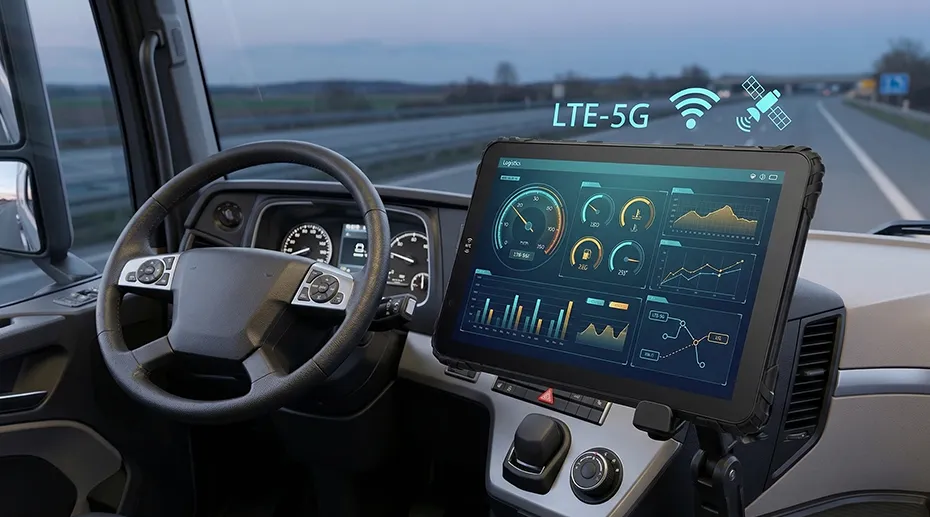
Table of Contents
1. What Is CAN Bus?
Controller Area Network (CAN Bus) is a vehicle bus standard designed specifically for automotive and industrial applications. It allows microcontrollers and electronic control units (ECUs) to communicate with each other without a host computer. A CAN‑Bus‑equipped in‑vehicle terminal can read engine RPM, fuel consumption, fault codes, and vehicle speed directly from the bus — data that RS232 simply cannot access.
✓ Designed for vehicles (ECU, engine, ABS, transmission)
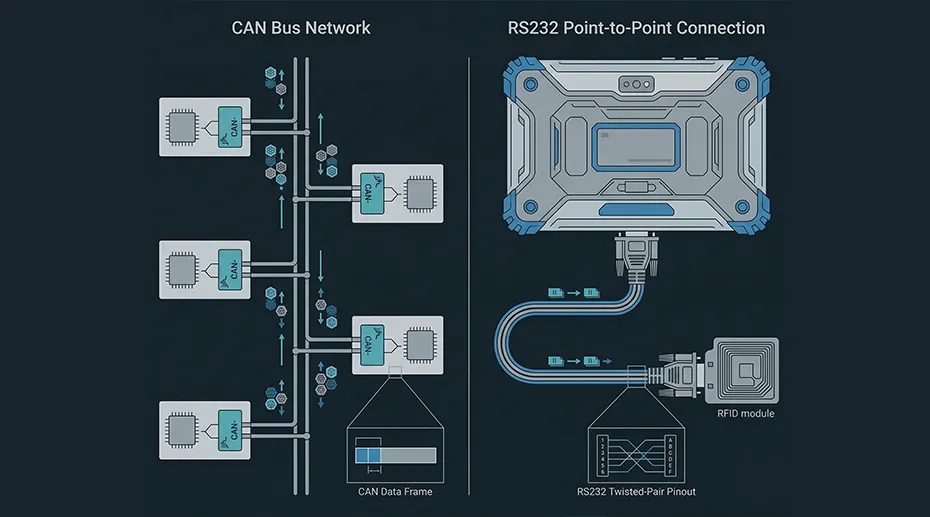
✓ Multi-node communication (up to 100+ nodes)
✓ Real-time data transmission with high reliability
✓ Strong anti-interference and error detection
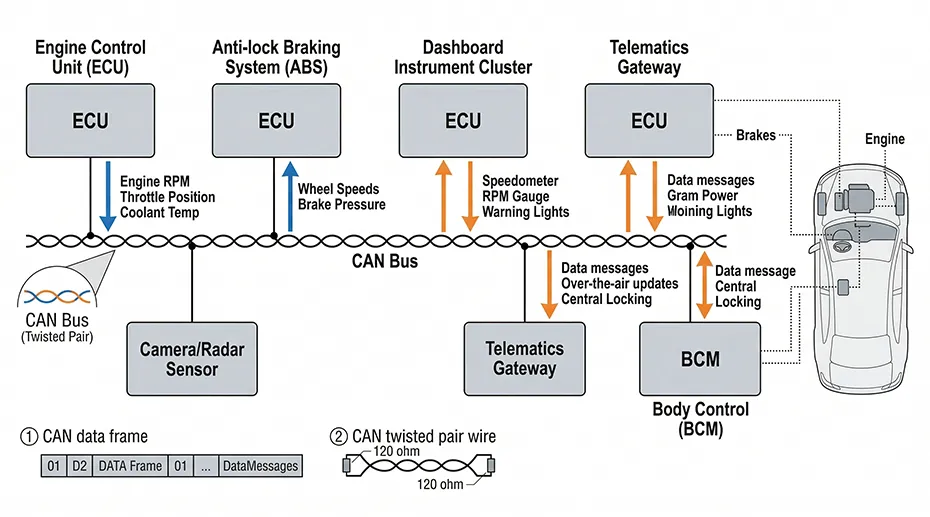
Key takeaway: CAN Bus is the standard communication backbone inside modern vehicles.
Source vehicle diagnostics tablets with CAN Bus →
2. What Is RS232?
RS232 is a traditional serial communication standard widely used in industrial and computer systems for decades. It is designed for point-to-point communication between two devices — ideal for connecting external peripherals rather than tapping into the vehicle's core data network.
✓ Point-to-point communication (one transmitter, one receiver)
✓ Lower speed compared to modern protocols
✓ Simple implementation and low cost
✓ Still used for connecting external peripherals
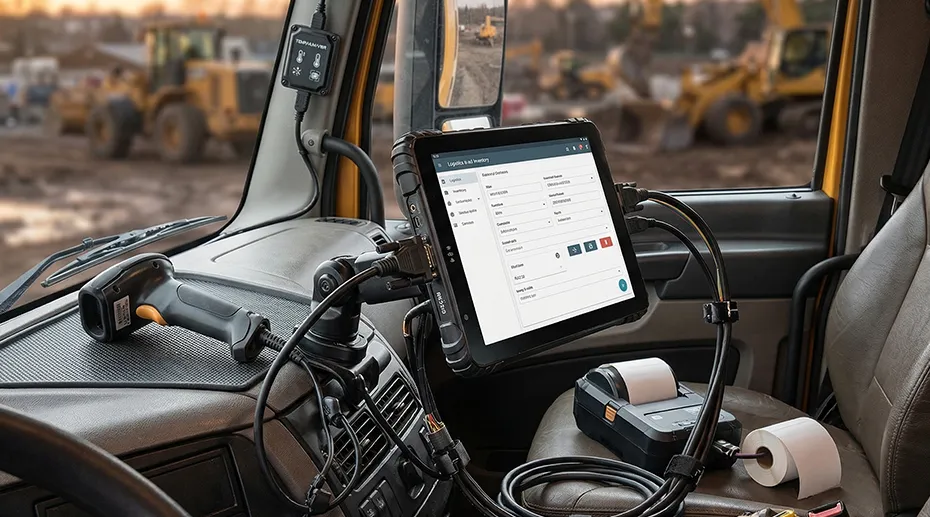
Key takeaway: RS232 is mainly used for connecting external devices rather than accessing vehicle core data.
Source RS232 serial interface tablets for peripherals →
3. CAN Bus vs RS232 – Key Differences
4. Which One Is Used in Modern Fleet Telematics?
The answer: CAN Bus is the core communication standard for vehicle data. RS232 serves as an auxiliary interface for peripherals. A modern fleet computing platform typically integrates both to deliver a complete telematics picture.
CAN Bus → Reads vehicle data: fuel consumption, speed, engine diagnostics, fault codes
RS232 → Connects external devices: RFID readers, barcode scanners, printers, legacy sensors
Key insight: Most modern in-vehicle systems require both CAN Bus and RS232 to function effectively.
5. Why CAN Bus Is Critical for Vehicle Data Integration
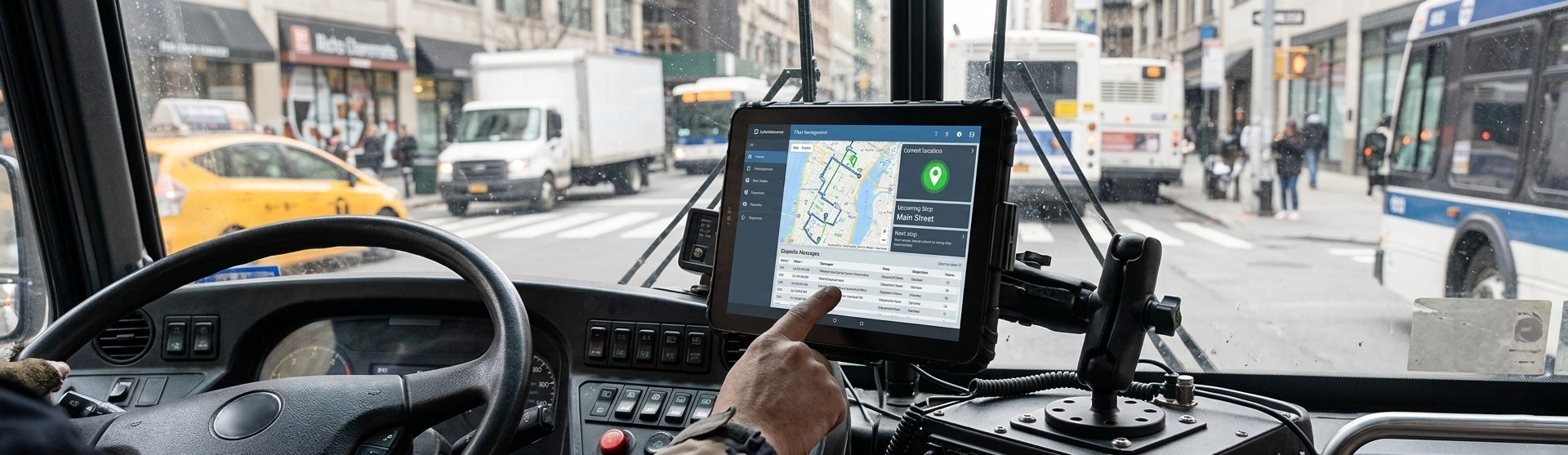
CAN Bus has become the industry standard for vehicle telematics and fleet management systems due to several key advantages:
Direct ECU Access
Read real-time data from engine, transmission, ABS, and other vehicle systems. A vehicle-integrated diagnostics terminal taps directly into the CAN network for live ECU streaming.
Real-Time Data
High-speed transmission for live fleet tracking and diagnostics.
OBD / J1939 Support
Compatible with standard heavy-duty vehicle protocols.
Fleet Telematics Essential
Required for fuel monitoring, driver behavior analysis, and predictive maintenance — the foundation of a data‑driven fleet operations center.
6. Where RS232 Still Matters in Vehicle Systems
Despite being an older standard, RS232 remains relevant for specific use cases in vehicle systems — especially when connecting legacy equipment that would be costly to replace.
Legacy Device Compatibility
Connect existing industrial sensors and equipment without costly upgrades — an industrial serial data collector bridges old and new systems.
External Modules
RFID readers, barcode scanners, printers, and GPS modules.

Low Cost
Simple implementation and inexpensive components.

OEM Customization
RS232 remains important for peripheral integration in customized OEM projects. Configure your custom I/O layout with the serial ports your deployment requires.
7. How to Choose the Right Interface for Your Vehicle Terminal
Scenario 1: Fleet Management / GPS Tracking
→ CAN Bus is required. You need vehicle data (speed, fuel, engine diagnostics) for real-time tracking and analytics. Deploy fleet tracking hardware →
Scenario 2: External Peripheral Connection
→ RS232 is required. You need to connect RFID readers, barcode scanners, printers, or legacy sensors. Source barcode & RFID tablets →
Scenario 3: Complete Telematics System
→ Both CAN Bus and RS232 are required. Full functionality demands vehicle data integration plus peripheral support. A dual‑interface in‑vehicle terminal covers every connection your fleet needs.
8. Why Modern Rugged Tablets Support Both CAN Bus and RS232
Modern vehicle-mounted tablets are designed to act as central hubs, integrating:
✓ CAN Bus for vehicle data (fuel, speed, diagnostics)
✓ RS232 for peripherals (scanners, RFID, printers)
✓ 4G/5G, GNSS, WiFi for cloud connectivity
TOPICON rugged tablets and MDTs offer:
✓ CAN Bus / OBD / J1939 support
✓ Multiple RS232 ports
✓ Vehicle docking design — compatible with locking vehicle computing docks
✓ Android system with MDM support
✓ OEM customization for system integrators
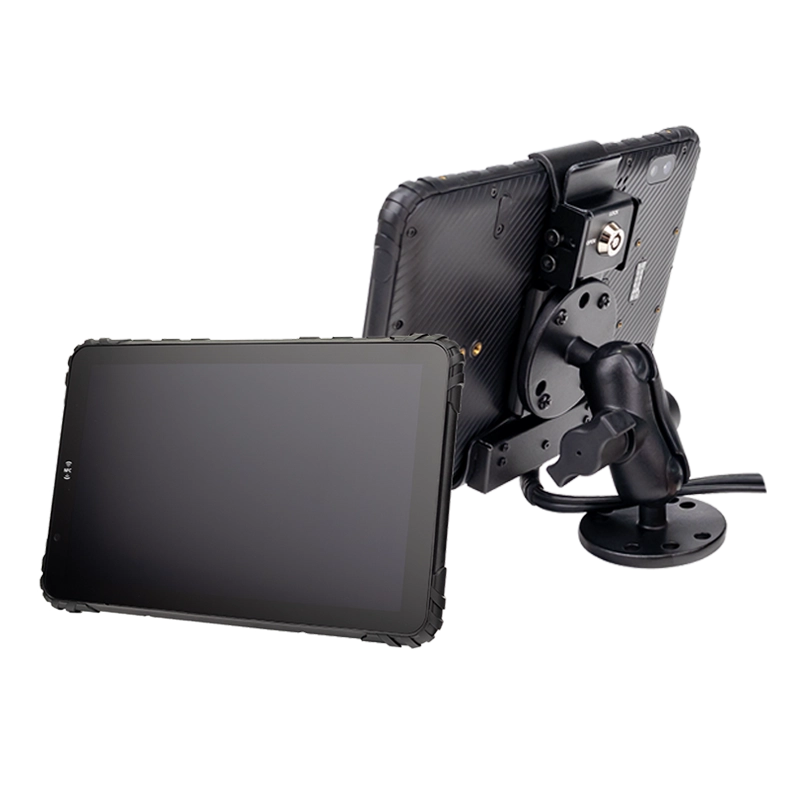
TOPICON In-Vehicle Rugged Tablets
Designed for fleet and telematics integration with full CAN Bus and RS232 support.
Explore Rugged Tablets →9. Frequently Asked Questions
Is CAN Bus faster than RS232?
Yes, CAN Bus typically operates at up to 1 Mbps, while RS232 is limited to 115.2 kbps. CAN Bus is significantly faster and more reliable for vehicle data transmission.
Do modern vehicles still use RS232?
RS232 is rarely used for core vehicle systems but remains common for connecting external peripherals like scanners, printers, and legacy sensors.
What protocol is used in telematics systems?
Modern telematics systems primarily use CAN Bus for vehicle data integration. RS232 is used for peripheral connectivity, while 4G/5G and WiFi handle cloud communication.
Can RS232 read vehicle data?
No, RS232 cannot directly read vehicle ECU data. It is designed for point-to-point communication with external devices, not for accessing vehicle bus systems.
Do I need CAN Bus for fleet management?
Yes, CAN Bus is essential for accessing real-time vehicle data that modern fleet management systems rely on. Deploy CAN‑Bus‑ready fleet tablets →
CAN Bus vs RS232: Choose the Right Interface
CAN Bus = vehicle backbone (ECU data, real-time telematics)
RS232 = peripheral interface (scanners, RFID, legacy devices)
A modern in-vehicle system requires integration of both protocols for maximum compatibility and scalability. Source vehicle terminals with dual CAN/RS232 support →
Related Telematics & Vehicle Integration Resources