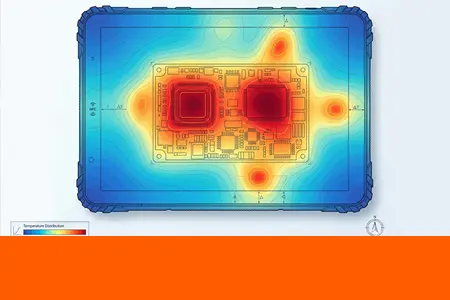
Beyond IP67: How Rugged Tablets Are Engineered for Drop, Vibration, and Corrosion Resistance
While IP67 is often treated as the benchmark for ruggedness, it only covers dust and water. In real-world industrial settings, a vehicle-grade rugged computing platform must survive repeated drops, constant vibration, and corrosive environments — and that takes engineering redundancy, not just a rating.
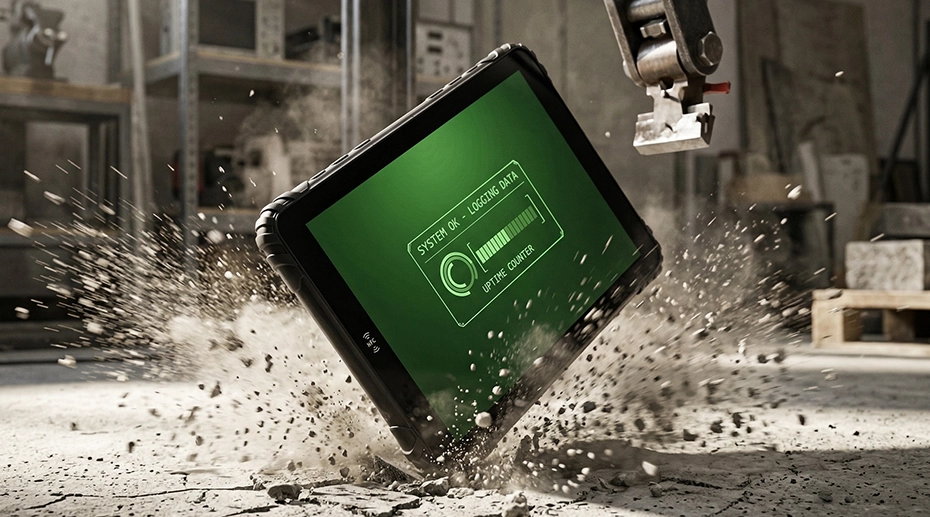
Table of Contents
1. Why IP67 Is Not Enough in Industrial Environments
The IP67 rating guarantees dust-tightness and protection against temporary immersion — but says nothing about surviving a 1.5-meter drop onto concrete or years of constant vibration inside a heavy truck. A hardened in‑vehicle processing unit must meet far more demanding mechanical and environmental standards to stay operational.
Key insight: Relying solely on IP ratings can be misleading when evaluating device durability. A truly industrial-grade tablet combines IP protection with MIL‑STD‑810H shock, vibration, and corrosion resistance.

IP67 ≠ Drop Protection
Water and dust resistance does not guarantee impact survival

IP67 ≠ Vibration Resistance
Standard seals don't protect against mechanical stress

IP67 ≠ Corrosion Protection
Humidity and salt exposure require additional engineering
2. Key Reliability Tests for Rugged Tablets
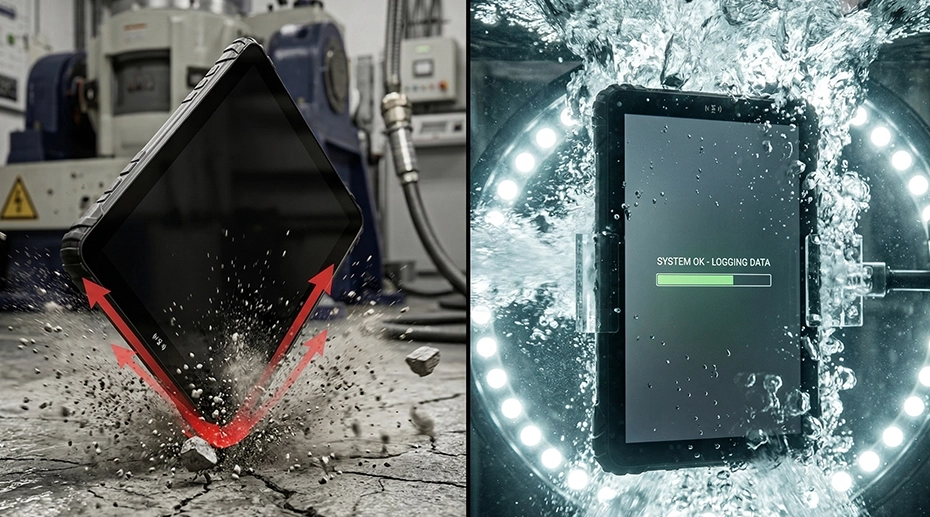
Industrial deployments demand validation that goes far beyond a lab dunk test. Devices destined for fleet vehicles, construction sites, and port operations must pass multiple mechanical stress scenarios. A fleet‑ready rugged computing device is validated against all three of the following.
Drop Testing
Multiple drops from different angles (corner, edge, face) — not just one-time testing. Repeated impact is the real killer in industrial environments. For in‑cab installations, a locking vehicle computing dock provides an additional layer of physical security.
Vibration Testing
Long-duration vibration testing for trucks, forklifts, and construction equipment — exactly where vehicle tracking tablets face constant mechanical stress. An engine‑vibration‑resistant vehicle computer must endure these forces without loosening internal connections.
Salt Spray Testing
Essential for marine, port, and coastal environments. Salt spray can corrode interfaces, PCBs, and enclosures — a test many manufacturers don't perform. For coastal fleet deployments, specify corrosion‑resistant mobile data collection hardware that has passed salt fog certification.
3. Where Standard Designs Fail
Failures often occur not in extreme events, but in repeated stress over time. A consumer tablet may survive one drop; a fleet tablet must survive hundreds of hours of vibration before the first maintenance check.
4. What Is Engineering Redundancy in Rugged Design?
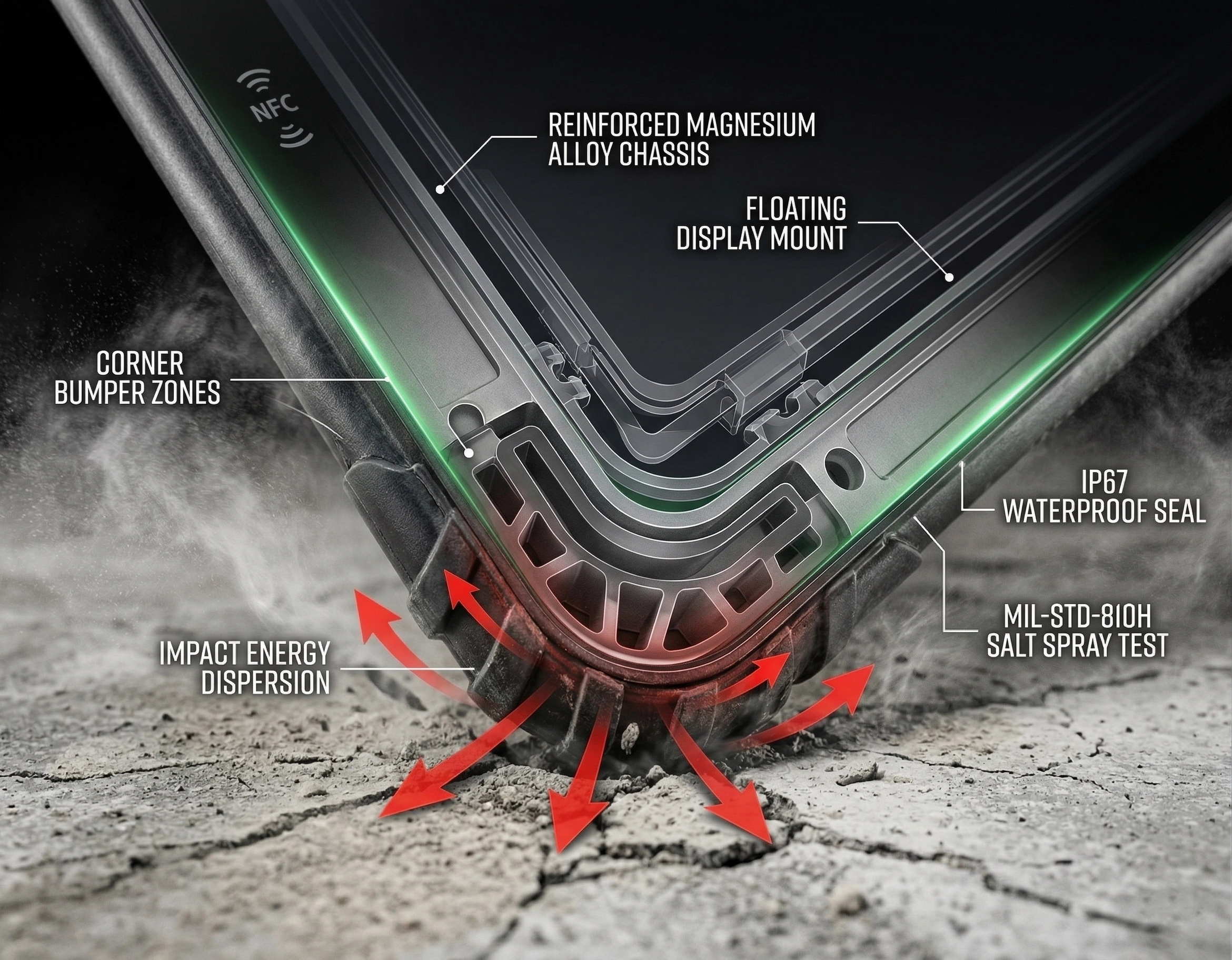
Engineering redundancy means designing beyond minimum standards — not just "good enough", but built to withstand unexpected stress over time. It's the difference between a device that passes a single certification test and a professionally mounted vehicle computing system that operates for years without intervention.
5. How TOPICON Applies Redundant Engineering Design
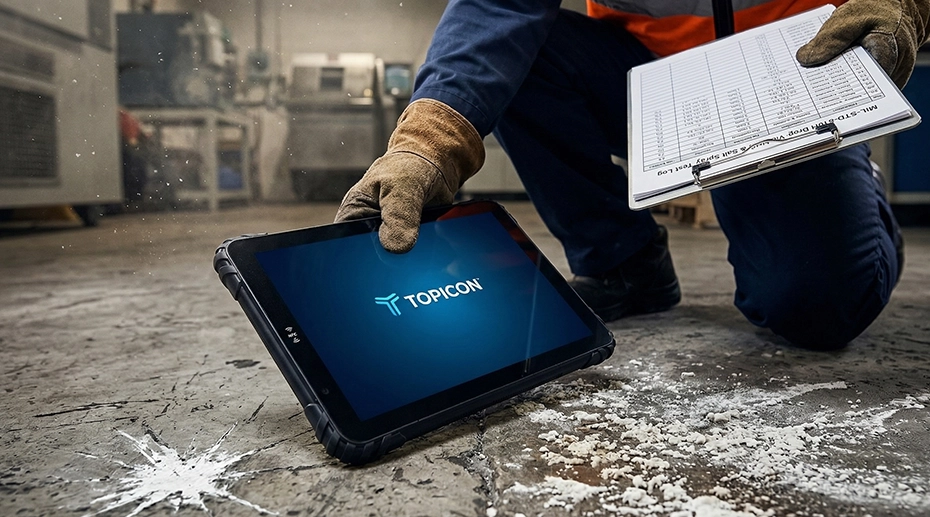
Enhanced frame and impact-resistant design for drop protection — a key requirement in heavy machinery onboard displays.
Water, dust, and corrosion protection with redundant sealing layers — the same approach used in ELD‑compliant devices for long‑haul trucks that face road salt and pressure washing.
PCB fixation and shock-absorbing structures for long-term vibration resistance.
Anti-loosening interfaces designed for long service life — essential for fleet vehicle data terminals that are docked and undocked hundreds of times.
Salt spray resistant coating and surface treatment for harsh environments.
Key takeaway: TOPICON devices are designed not just to pass tests — but to survive years of real-world use. Configure a rugged tablet project with the exact mechanical protections your environment requires.
6. How Over-Engineering Reduces Total Cost of Ownership
While over-engineering may increase initial design complexity, it significantly reduces total cost of ownership (TCO) for fleet operators and industrial users. A purpose‑built fleet computer with redundant engineering generates savings through longer service intervals, fewer replacements, and higher uptime.

Fewer failures

Lower maintenance cost

Less downtime

Longer lifecycle
7. Standard Rugged vs Industrial-Grade Rugged Tablets
8. How to Choose a Truly Rugged Tablet

9. Built for Real-World Industrial Challenges
TOPICON Rugged Tablets
Engineered for fleet vehicles, construction equipment, and harsh industrial environments.
10. Frequently Asked Questions
Does IP67 mean drop-proof?
No. IP67 only certifies dust and water resistance, not impact or drop protection. A shock‑certified vehicle tablet carries a separate MIL‑STD‑810H rating for drops and vibration.
What is vibration resistance in rugged devices?
Vibration resistance ensures internal components remain secure under prolonged mechanical stress from vehicles or machinery.
Why is salt spray testing important?
Salt spray testing validates corrosion resistance for marine, coastal, and chemical environments. For coastal fleet operations, specify corrosion‑validated mobile data collection platforms.
What is engineering redundancy?
Engineering redundancy means designing beyond minimum standards to ensure long-term reliability under unexpected stress.
How long do rugged tablets last?
Industrial-grade rugged tablets with redundant design can last 5-7 years or longer, depending on usage and environment. Request lifecycle data for your target deployment.
IP67 Is Just the Beginning
Industrial environments demand more than basic dust and water protection. System-level design — from drop resistance to vibration tolerance and corrosion prevention — is essential for true reliability.
Related Rugged Tablet & Engineering Resources