IP65 vs IP67 vs IP68: Rugged Tablet Ratings Explained
Most rugged tablet spec sheets put “IP67” in bold and stop there. The number looks like a guarantee, but it only answers two questions: how well the enclosure keeps dust out, and how it behaves against one specific water test. It says nothing about pressure washing, salt water, condensation, or how the gasket behaves after two years on a forklift.
Reviewed by the TOPICON hardware team · Updated November 2026
1. What an IP rating actually measures
IP stands for Ingress Protection, defined in IEC 60529. The two digits are independent: the first covers solids, the second covers water.
A rating of IP67 means “dust tight” (6) and “immersion protected” (7). It does not mean waterproof in the everyday sense, and it is not a lifetime warranty. The test is performed on a clean, new sample with gaskets correctly seated.
| Water rating | Test condition | What it means in practice |
|---|---|---|
| IPX5 | 6.3 mm nozzle, 12.5 L/min, 3 min | Rain and low-pressure hose spray |
| IPX6 | 12.5 mm nozzle, 100 L/min, 3 min | Powerful jets, deck wash |
| IPX7 | Immersion at 1 m for 30 min | Accidental drop into water, shallow submersion |
| IPX8 | Immersion beyond 1 m, depth and time set by the manufacturer | Depends entirely on the maker’s stated condition |
| IPX9K | 80 °C water at 80–100 bar (ISO 20653) | High-pressure, high-temperature washdown |
2. IP65 vs IP67 vs IP68 in one table
| Property | IP65 | IP67 | IP68 |
|---|---|---|---|
| Dust | Dust tight | Dust tight | Dust tight |
| Water | Jets (IPX5) | Immersion 1 m / 30 min | Immersion beyond 1 m, maker-defined |
| Typical use | Indoor/outdoor general | Rain, mud, accidental drop into water | Marine, utility, heavy exposure |
| Pressure wash | No | No | No, unless IPX9K |
| Salt water | Not covered | Not covered by the test | Not covered by the test |
The practical difference between IP65 and IP67 is not “more waterproof”. It is jets versus immersion. A device sealed for 1 m immersion can still fail under a pressure jet aimed at a port cover, because the test pressures are different.
3. What IP67 does not cover
This is where most procurement misunderstandings start.
Pressure washing. IPX5/IPX6 jets are not a 100-bar washer. Water finds the charging flap, speaker mesh and pogo pins.
Salt water and salt fog. The IP test uses fresh water. Salt crystallises in connectors and accelerates corrosion; a marine tablet needs rinsing and a salt-fog-tested design, not just IP67.
Steam and hot water. Steam penetrates gaskets that hold against cold water.
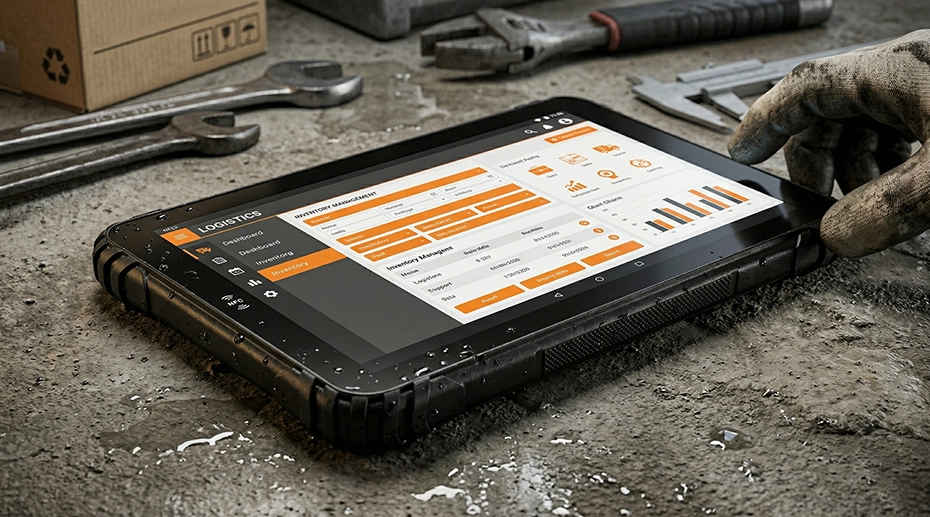
Condensation. A tablet that moves from a cold truck into a warm warehouse can fog internally even with a perfect seal. This is a design and venting problem, not a rating problem.
Chemicals and solvents. Cleaning agents can degrade gasket materials.
Drops, vibration and heat. These are mechanical and thermal tests, covered by MIL-STD-810H, not by IP.
If a supplier says “IP67, so it is fully waterproof”, ask which ports are sealed when the dock connector is exposed, and whether the rating was tested with the tablet docked or undocked.
4. Where fleet tablets actually fail
Field returns are rarely dramatic. They are usually one of these:
Charging port gasket. The flap is opened daily; grit prevents a full seal; water enters at the USB-C connector.
Dock connector. The pogo-pin area is exposed when the tablet is out of the dock. The dock itself may be sealed, but the tablet contacts are not.
Speaker and microphone mesh. Water passes slowly and reaches the board, or the mesh clogs with dust and reduces volume.
Camera lens and flash. Adhesive around the lens cover fails after thermal cycling.
Screen perimeter. A drop that distorts the frame can break the seal without breaking the glass.
Condensation after cold-to-warm moves. Especially in cold chain, freezers and winter yards.
A spec sheet cannot tell you which of these will happen in your fleet. A teardown, a dock design review, and a pilot will.
5. Match the rating to the environment
| Environment | Minimum rating | Notes |
|---|---|---|
| Dry warehouse, dust only | IP54–IP65 | Dust is the main enemy; ports still need covers |
| Outdoor yard, rain, mud | IP65–IP67 | IP67 preferred if the device can be dropped in water |
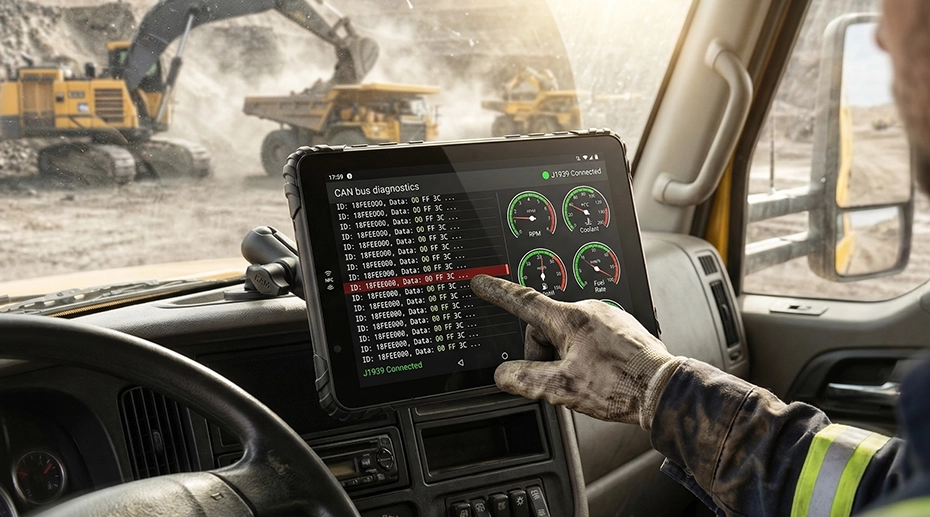
| Truck cab, vibration, rain at the door | IP67 | Check dock contacts and cable entry |
| Food and beverage washdown | IP66–IP69K | Stainless hardware, no exposed ports, chemical compatibility |
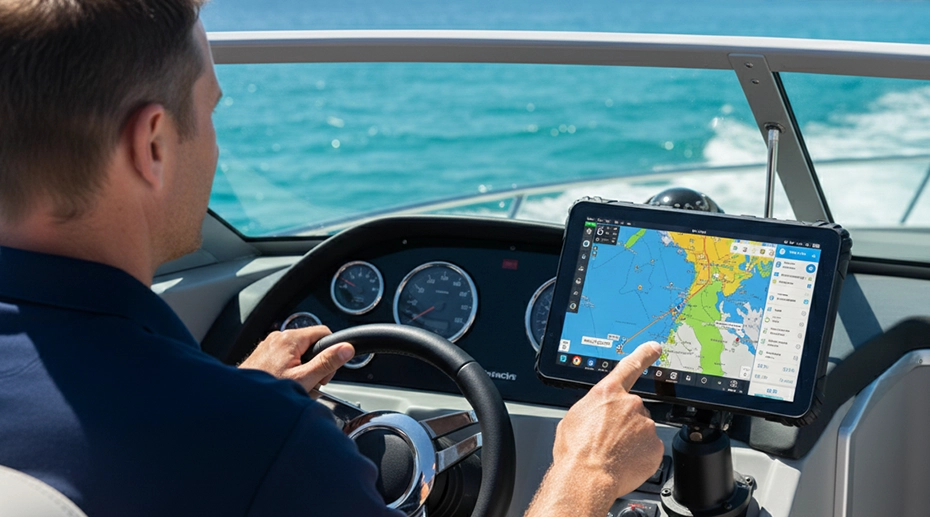
| Marine, deck spray | IP67 + salt-fog testing | Fresh-water rinse routine; check connector plating |
| Cold storage / freezer | IP67 | Condensation and battery behaviour matter more than the digit |
| Mining, construction | IP67 | Dust and vibration dominate; IP alone is not enough |
For most fleet deployments, IP67 is the sensible default. IP65 is adequate for sheltered, dust-only sites. IP68 is only meaningful when the manufacturer states the depth and duration, and when the actual risk is submersion rather than spray.
6. IP rating vs MIL-STD-810H
These are different test families and should not be conflated:
IP (IEC 60529): dust and water ingress.
MIL-STD-810H: environmental engineering tests—high and low temperature, thermal shock, humidity, salt fog, sand and dust, vibration, shock and drop.
MIL-STD-810H includes a rain method, but it is not an immersion test. A device can pass 810H drop and vibration and still fail an IPX7 immersion check, or the reverse. Procurement documents should list both, with the specific methods and levels.
Also note that “MIL-STD-810H tested” without a method number is close to meaningless. Drop height, axis, surface and number of drops all change the result.
7. A procurement checklist
Before you accept “IP67” on a datasheet, ask:
Which IP test report, from which lab, with the tablet docked or undocked?
Are all ports covered during the test—USB, SIM, SD, dock connector?
Is the rating maintained after a drop? Is there a post-drop ingress check?
What is the gasket material and expected service life?
Does the dock have its own ingress rating, and what happens to the tablet contacts when undocked?
Is salt fog tested if the deployment is marine or coastal?
Is there a condensation or venting strategy for cold-chain use?
If the answers are vague, the rating is marketing, not engineering.
8. Frequently asked questions
Send us the environment and the cleaning method. We will tell you which rating is actually required, and where the enclosure will fail first.
Talk to an engineerCompare models