
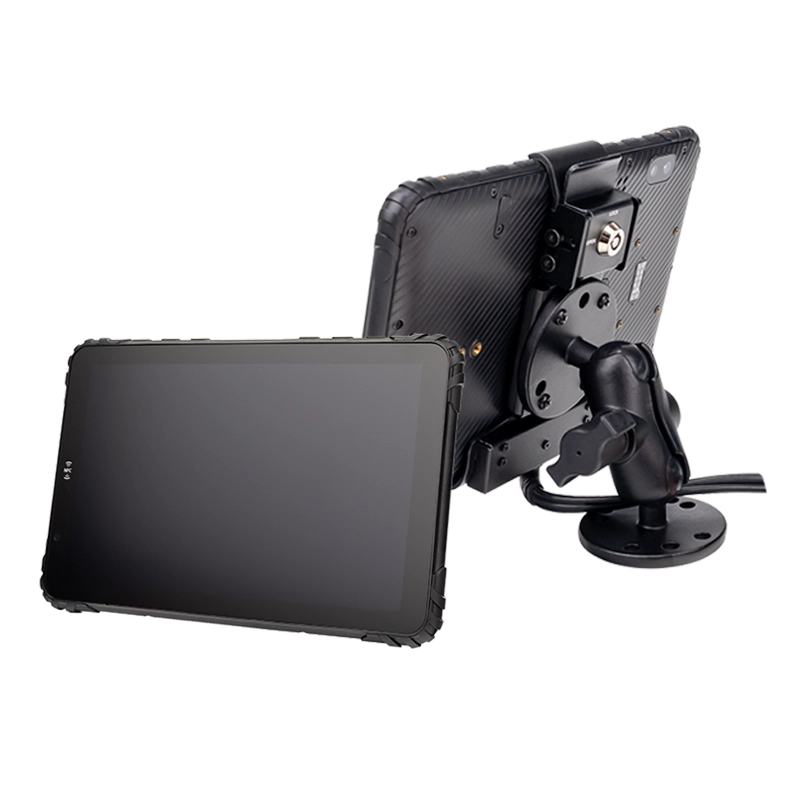
What removes a tablet from a fleet bid before the datasheet matters?
Four constraints decide the shortlist. None of them is the processor.
Driver app vs. your EMM
If your software is the product, the tablet must ship without a vendor MDM locked in. We ship GMS or AOSP and enrol into the console you already run.
Carrier certification
PTCRB is held on MDT865 and not on MDT880. In the US that one line decides which unit can carry a carrier SIM — before price is discussed.
How the vehicle is shared
A truck used by three drivers needs a quick-release dock and a bracket that stays wired. A dedicated vehicle can take a fixed cradle instead.
Lifecycle, not the datasheet
A fleet is bought once and refreshed for years. BOM locking, last-time-buy notice and dock compatibility matter more than a newer SoC.
Read next: Quick-release vs all-metal fixed dock
Built for the people who build the software
System integrators, ELD providers and telematics platforms — not end users buying one tablet.
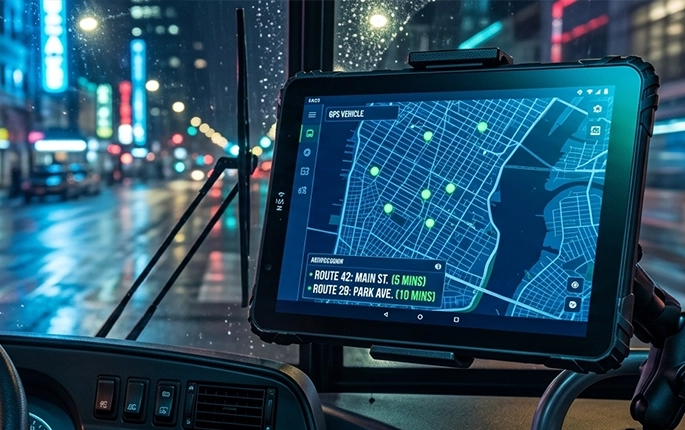

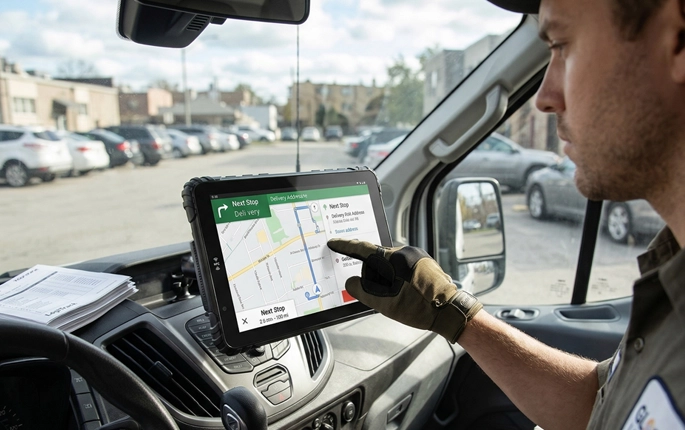
Three buyers, one requirement: the hardware must disappear behind their software. That is why every model below ships with a documented BOM and a private-label option.
What the vehicle side of a fleet deployment actually requires
Stated as the range we support today, not as a maximum on a spec sheet.
| Dimension | Range we support | Why it matters in a fleet |
|---|---|---|
| Vehicle power | 9–36 VDC nominal, ignition and ACC sensing | 12 V and 24 V fleets share one harness. 48 V and 80 V systems need an external DC-DC converter. |
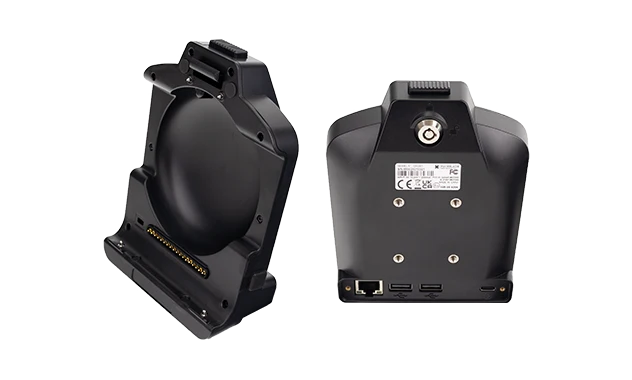
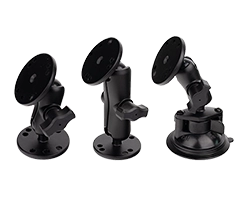
| Mounting | Quick-release dock plus RAM arm | Vehicles are shared, so the dock stays wired and the tablet moves with the driver. |
| Network | 5G on MDT880, LTE on MDT865, M12 Ethernet on CRD865-M12 | Ethernet is for yard backhaul — more reliable than Wi-Fi through a depot wall. |
| Vehicle bus | 1× CAN on MDT865, 2× CAN on MDT880, J1939 | Odometer, RPM, fault codes and fuel. GPIO reads ignition, door and PTO state. |
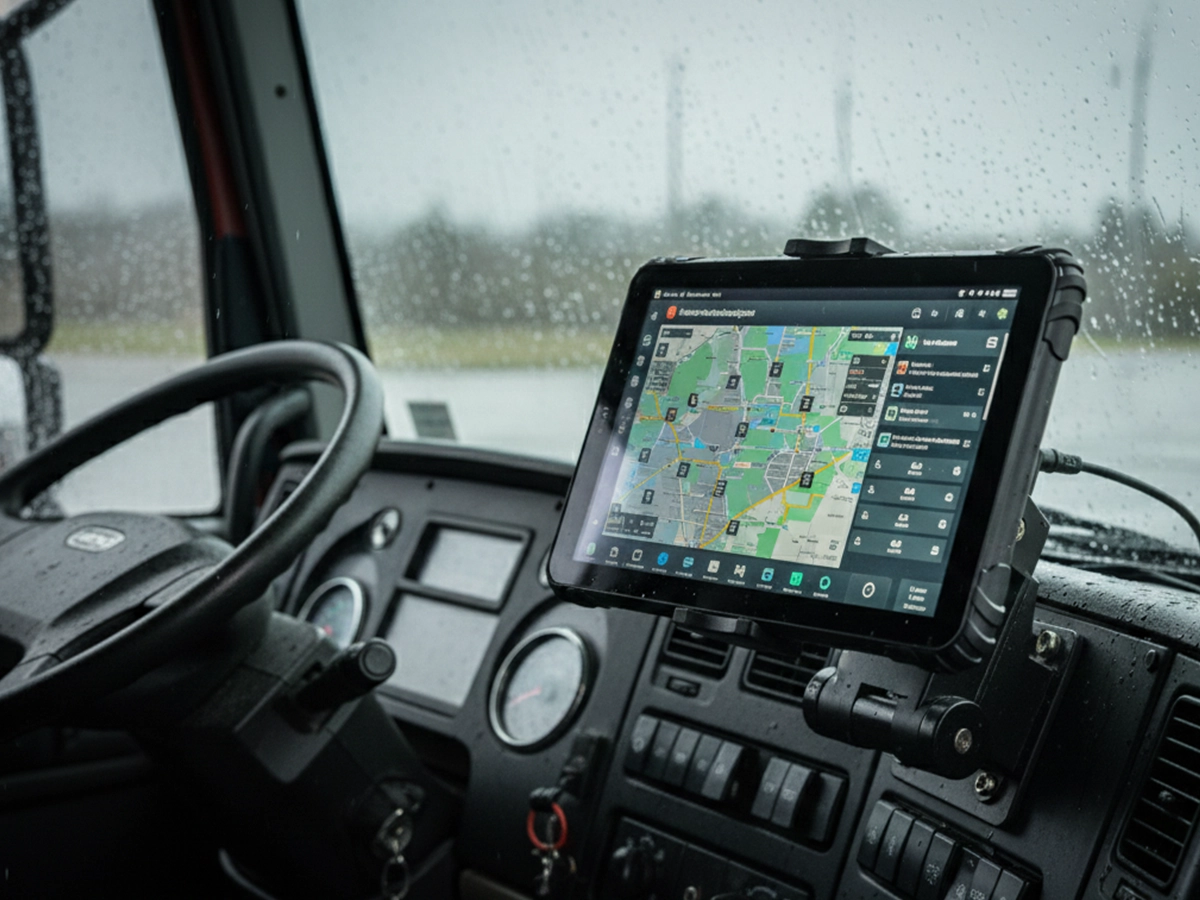
| Display | 8" 1280×800 at 1000 nit | Readable in side-light through a cab window. The 10" MDT1065 is 500 nit — not a cab-side display. |
| Handover | MDT680 or MDT665 handheld for the walk-around | Charges on CRD665-REG at the depot; same app, same MDM, one device per driver. |


Read next: Ignition control and power states · CAN bus vs OBD-II
Three sets, priced as a unit — tablet, dock, mount, module
Order by the mounting position, not by the biggest screen.
| Position | Tablet | Dock / cradle | Mount | Module | Do not pick this if |
|---|---|---|---|---|---|
| Line-haul truck, 4G, cost-first | MDT865 | CRD865-BAS | RAM arm, short | EXT-USB-CAN-01 for vehicle data | You need 5G and dual CAN on the same unit — take MDT880 |
| Line-haul truck, 5G, dual CAN | MDT880 | CRD880-CAN | RAM arm, short | Ignition-sense harness on GPIO | The project needs PTCRB — MDT880 does not carry it |
| Depot or yard fixed terminal | PC890 | — | VESA 75×75 arm | M12 Ethernet backhaul | The vehicle has no fixed power drop |
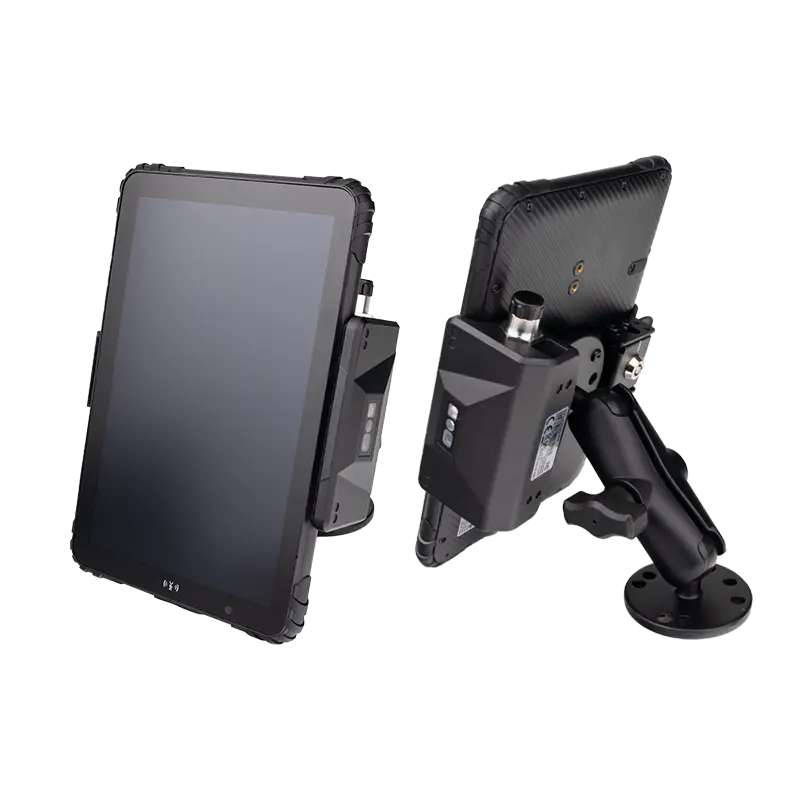
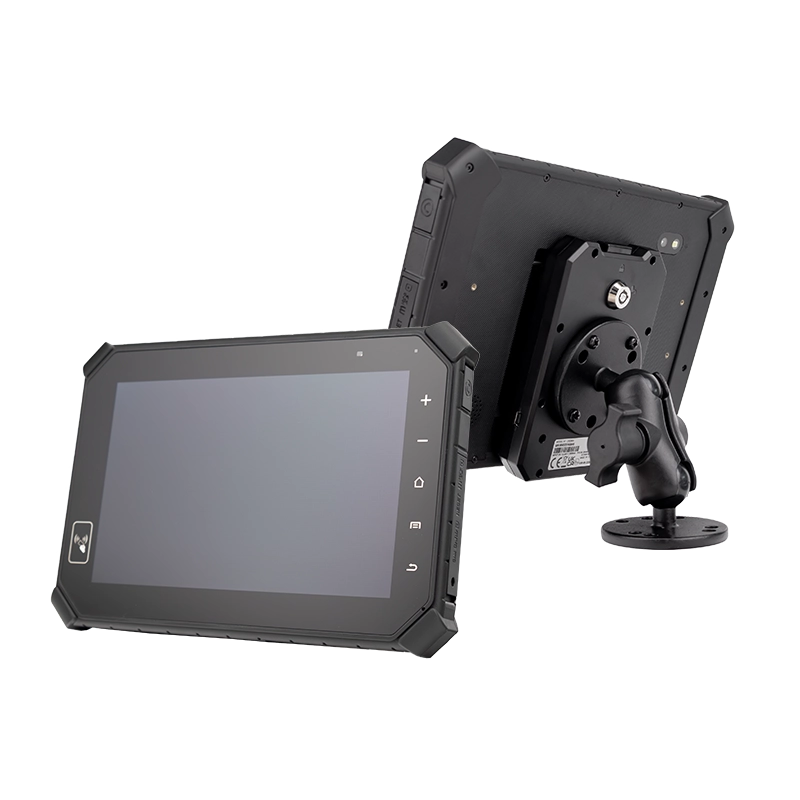
Pin definitions stay in the docking matrix — do not wire from a datasheet summary.
See the hardware in action
Three ninety-second clips: camera input, scanner input and GNSS. No voiceover, no marketing.
All three features are available for OEM/ODM builds. Ask for an integration session →
Dock-connected video or a separate MDVR: read the architecture comparison
Where each cable comes from, and where it goes
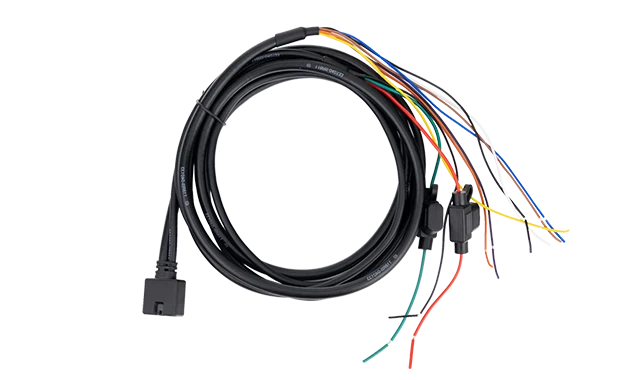
Nothing here requires cutting the truck’s factory harness. Power and signals are taken inside the dock.
| Interface | Used for | How it is wired | Detail |
|---|---|---|---|
| Ignition / ACC | Engine-run detection, sleep and reporting | Taken inside the dock harness; no splice into the factory loom | Vehicle power → |
| CAN J1939 | Odometer, RPM, fault codes, fuel | Native output on CRD865-CAN and CRD880-CAN | CAN bus → |
| RS232 / RS485 | Legacy scales, printers, GPS receivers | MDT865: 2× RS232 + 1× RS485 directly on the device | Serial → |
| GPIO | Door, PTO and lift state | 4× GPIO on MDT865, 5× on MDT880 | CAN & GPIO → |
| M12 Ethernet | Depot backhaul, camera NVR | CRD865-M12 and CRD880-M12, sealed connector | Dock matrix → |
Read next: Where to tap power, and when you need DC-DC
What each model can enter, by market
A dash is a gap, not a footnote. Read the last column before you bid.
| Model | US / Canada | EU / UK | Australia | Practical consequence |
|---|---|---|---|---|
| MDT865 | FCC, IC, PTCRB | CE, UKCA | RCM | The only fleet SKU with both PTCRB and RCM |
| MDT880 | FCC, IC | CE, UKCA | — | 5G unit without PTCRB: not a US carrier-certified telematics device |
| PC890 | FCC, IC | CE, UKCA | — | Fixed terminal; carrier acceptance does not apply |
PTCRB is a carrier-acceptance requirement for cellular telematics, not a general safety mark. A device can hold FCC and still be rejected by a US carrier without it. Open the certification matrix.
How 200 units get imaged, enrolled and replaced
The hardware decision is one week. The deployment plan decides the next four years.
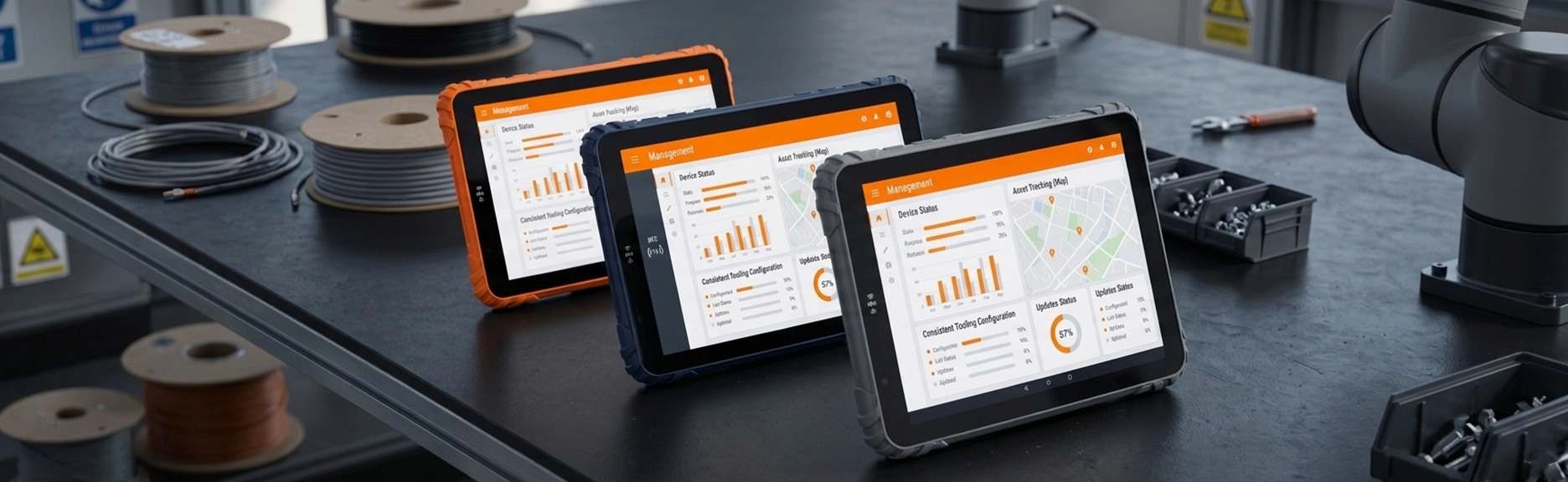
Image — AOSP build with or without Google services; your telematics APK and keystore are baked in at the factory.
Enrolment — Android Enterprise zero-touch or your own EMM. Devices configure themselves on first power-on.
Updates — Staged OTA by depot. The dock supplies power, so an update can run overnight in the yard.
Spares — 8–10% float per 200 units; a spare in the shelf costs a fraction of a stopped truck.
RMA — Advance replacement against a PO with a service contract; turnaround is stated in the quote.
Private label — Bezel, boot logo, packaging and BOM under your brand.
Lifecycle — 5-year BOM commitment with a documented last-time-buy window before any EOL.
Read next: How to choose an 8-inch rugged tablet
Three-year cost of a 200-truck fleet
The assumptions are the point — replace them with your own numbers and the model still holds.
| Line | Assumption | What it covers |
|---|---|---|
| Hardware | 200 × MDT865 + 200 × CRD865-BAS | Capex, quoted per project, dock included |
| Spares | 16 units (8% float) | Swap pool; the alternative is a truck standing still |
| Dock contacts | Replacement at 18 months in dusty depots | Contact wear fails before the tablet does |
| Connectivity | 200 SIMs × 36 months | Priced by the carrier, not by us — excluded from our quote |
| Downtime | Your cost per truck-day × days lost | Usually larger than the hardware line |
SIM contracts, carrier certification fees and your own integration hours. We state them so the comparison against a tier-1 brand is honest — their quote hides the same lines.
Frequently asked questions
The five questions that come up in every fleet evaluation.
Can a fleet tablet run our telematics app without Google services?
Yes. AOSP images without GMS are shipped per project; MDM enrolment runs through your own EMM rather than Google’s.
Do we need PTCRB for a US fleet deployment?
If a carrier SIM is involved, yes. MDT865 carries PTCRB; MDT880 does not, so it stays on projects that do not require carrier acceptance.
Which unit do drivers use in a shared truck?
MDT865 in a quick-release CRD865-BAS dock. The dock stays wired to the vehicle and the tablet moves with the driver.
How do Android upgrades work across a five-year fleet?
The image is locked per project and upgraded in stages by depot, not at once. MDT865 ships on Android 12/14 with your choice of GMS or AOSP.
What happens when a model reaches end of life?
We publish the roadmap and give 12+ months of last-time-buy notice, with a form-fit-function replacement that keeps the same dock.
Send the model list and the markets, and we will answer with the dock, the harness and the certification status per model — not a catalogue PDF.
Talk to engineering