1000-Nit Tablet — What the Number Means, What It Does Not, and How to Specify It for a Fleet
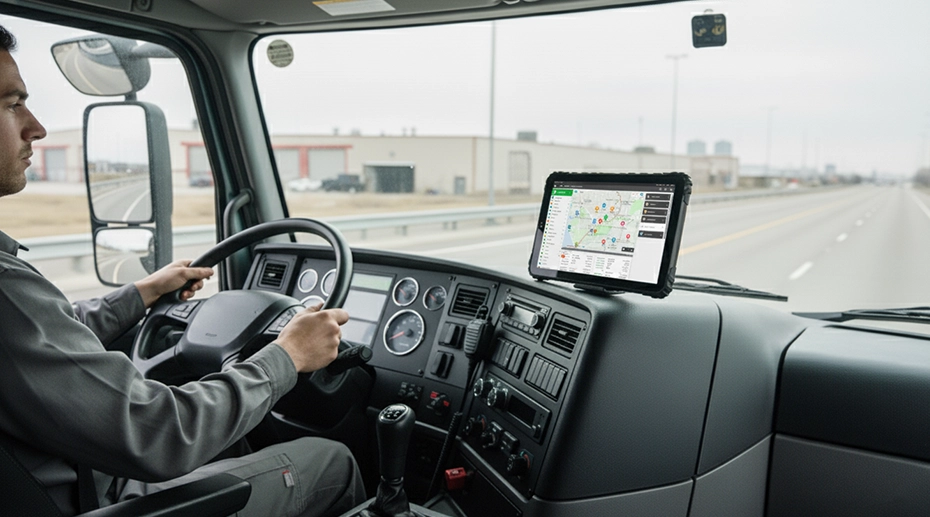
A 1000-nit display sounds like a solved problem. The backlight is bright enough to overcome the sun. But a tablet mounted on a vehicle windshield at noon is not the same viewing condition as a tablet held in the shade. The number on the spec sheet describes one emission property. It does not describe the reflection, the contrast, the power draw, or the thermal cost of running that backlight continuously. This article covers what 1000 nits actually delivers in a fleet environment, and what else has to be specified alongside it.
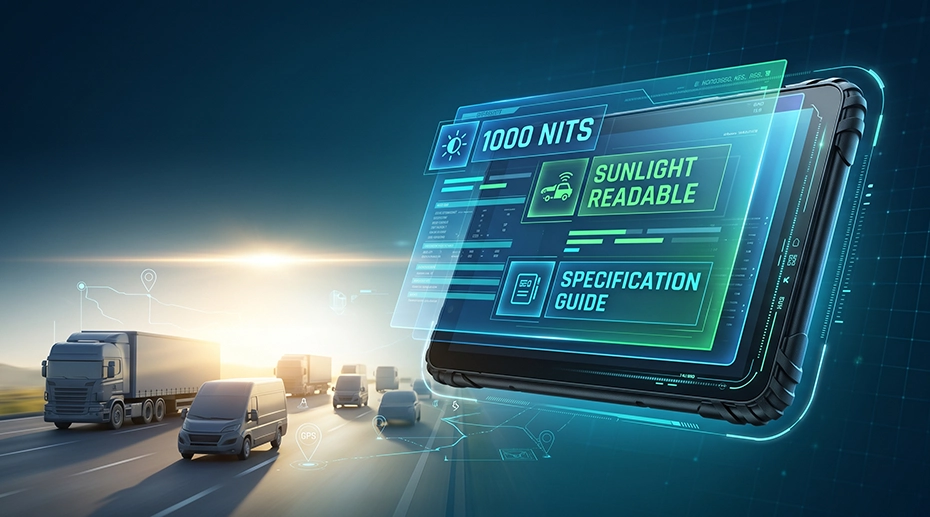
Table of Contents
1. What Nits Measure
A nit is one candela per square metre. It describes the luminance emitted by the display surface toward the viewer. A consumer tablet typically emits 200 to 400 nits. A 1000-nit display emits roughly two and a half to five times that amount.
The emitted light is only one half of the viewing equation. The other half is the light reflected off the screen surface. The viewer sees the difference between the two: emitted light minus reflected light, subject to the contrast ratio of the panel. If the reflected light is high, the emitted light has to overcome it before any content becomes legible.
A 1000-nit display in a dark room is excessively bright. The same display in direct sunlight on a vehicle windscreen is not automatically readable, because the reflected light from the glass and the panel can approach the emitted light. The number is necessary. It is not sufficient. The in-vehicle tablet platform documentation lists 1000 nits as the baseline display specification for fleet deployments, alongside the optical construction that makes that number usable.
2. The Reflection Problem
Two reflections degrade a vehicle-mounted display. The first is the external reflection from the cover glass. A glossy surface reflects the sky, the driver’s clothing, or the sun itself as a bright specular highlight. The second is the internal reflection from the air gap between the LCD panel and the cover glass. That air gap creates two additional reflective interfaces inside the display stack.
A glossy 1000-nit panel with an air gap can be less readable in a sunlit cab than a lower-brightness panel with anti-glare treatment and optical bonding. The bright backlight does not remove the reflections; it raises the overall luminance of the screen, including the reflected image. The driver sees a brighter glare, not clearer content.
This is why the 1000-nit specification has to be read together with the surface treatment. A glossy panel and an anti-glare panel with the same backlight do not produce the same viewing experience. The 800-nit anti-glare vs 1000-nit glossy comparison covers the effective contrast calculation in detail.
3. Optical Bonding and Anti-Glare Treatment
Optical bonding fills the air gap between the LCD panel and the cover glass with an optically clear adhesive. This removes the two internal reflective interfaces, which increases effective contrast and reduces the washout caused by ambient light.
Anti-glare treatment changes the external surface from specular to diffuse. A glossy surface reflects the sun as a concentrated point or streak. An AG coating scatters that reflection across the surface, reducing its peak intensity. The trade-off is a slight softening of the image, which is acceptable for map, form, and telematics data.
The combination — 1000-nit backlight, optical bonding, and AG treatment — is what makes the number usable. Without the bonding, the internal reflections reduce the effective contrast. Without the AG treatment, the external reflection creates a glare that the backlight cannot overcome. The construction rugged tablet platform lists 1000-nit brightness alongside the sunlight-readable construction required for outdoor job sites.
TOPICON MDT880 / MDT865 Sunshield Cap Installation & Anti-Glare Demo
Sunshield installation and anti-glare demonstration on the MDT880 / MDT865 1000-nit display.
4. Power and Thermal Cost
The backlight is one of the largest power consumers in a tablet. A 1000-nit display running continuously draws more current than a 600-nit display running at the same content brightness. In a vehicle with a 9–36V supply and a finite battery, that current becomes a thermal and runtime variable.
Higher backlight power produces more heat. In a sunlit cab, the display is already exposed to solar gain. The additional heat from the backlight raises the panel temperature and can trigger the tablet’s thermal throttling, which reduces the backlight or the processor clock to protect the device. The result is a display that is bright on a bench test and dimmer after two hours in a hot vehicle.
The 1000-nit specification is therefore a thermal specification as well as an optical one. The tablet’s thermal design — the heat spreader, the housing, the operating temperature range — determines whether the display sustains 1000 nits or only reaches it momentarily. The thermal management guide covers the heat paths in a vehicle cab.
5. Where 1000 Nits Fits in a Fleet Specification
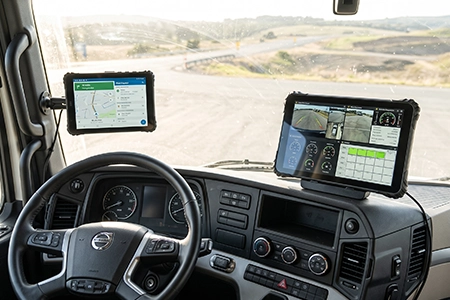
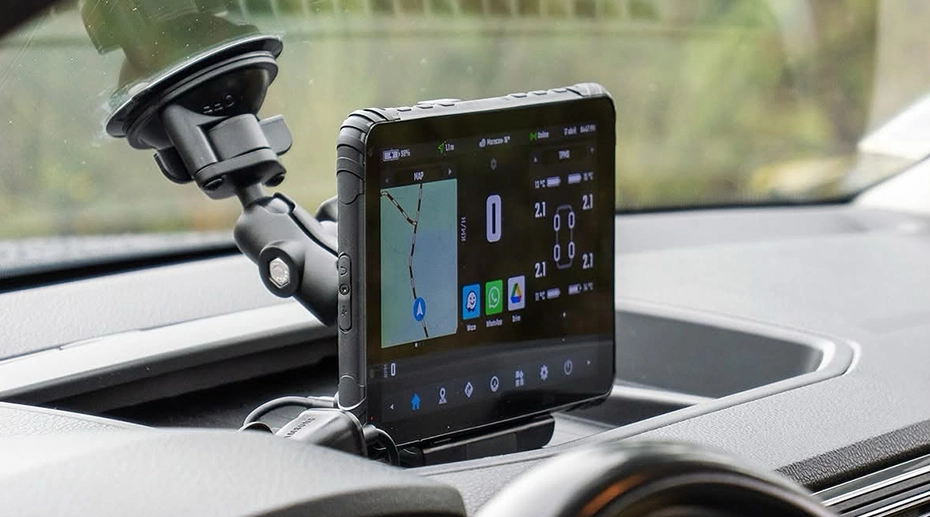
The brightness requirement depends on the mounting position and the vehicle class. A tablet mounted deep inside a shaded cab does not see the same ambient light as a tablet mounted on the A-pillar or an open-deck vehicle. Three deployment profiles cover most fleet scenarios.
The MDT880 and MDT865 both use 1000-nit anti-glare displays with optical bonding, which places them in the second and third profiles. For deployments that sit primarily in the first profile, the 800-nit class may be sufficient, and the 800-nit vs 1000-nit comparison covers the trade-off.
Single Point of Failure
A 1000-nit display that throttles to 600 nits after two hours is not a 1000-nit deployment. The brightness specification is measured on a bench, at room temperature, with the backlight at maximum. In a sunlit cab, the thermal load from the backlight and the solar gain together can push the panel into a throttling state. The driver sees a screen that was readable at the start of the shift and unreadable by mid-afternoon. The thermal design, the bonding, and the AG treatment are not display accessories. They are the variables that determine whether the number on the spec sheet survives the operating environment.
The 1000-nit specification appears on several industrial tablets in the market, including 10-inch models from Getac and similar vendors. The brightness number is comparable. The design target is not. Those devices are built for outdoor fieldwork and mining operations — thick housings, large battery packs, and thermal solutions sized for sustained outdoor use. A vehicle-mounted tablet has a different constraint: it is installed in a cab, powered from the vehicle, and expected to fit within the dashboard or A-pillar geometry without blocking the driver’s sight line.
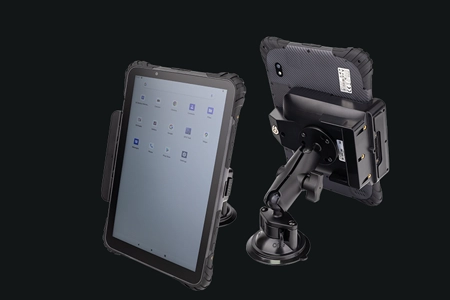
The MDT880 and MDT865 are both 8-inch platforms with 1000-nit anti-glare displays and optical bonding, designed around vehicle mounting rather than handheld outdoor use. The housing is thinner, the power input is 9–36V with ignition sensing, and the dock interface is integrated into the rear of the device. For deployments that sit in a shaded cab rather than direct sun, the MDT1080 offers a 10-inch 800-nit display with 5G connectivity — the larger screen area without the thermal and power cost of a 1000-nit backlight.
6. Specification Checklist
Before specifying a 1000-nit tablet for a fleet deployment, confirm the following.
• Surface treatment: Is the 1000-nit panel anti-glare or glossy? A glossy panel at 1000 nits can be less readable than an AG panel at a lower brightness.
• Optical bonding: Is the display optically bonded? Without bonding, the internal air gap reflections reduce the effective contrast that the backlight provides.
• Thermal design: Does the tablet sustain 1000 nits in a hot cab, or does it throttle? The operating temperature range and the backlight power draw are the relevant specifications.
• Power budget: Does the 9–36V vehicle supply and the tablet’s battery support the backlight current at maximum brightness for a full shift?
• Sunshield: For open-deck or large-windscreen deployments, is an optional sunshield available? The sunshield reduces the ambient light reaching the screen surface and lowers the effective brightness requirement.
The complete rugged tablet product catalog lists the display specifications for each platform, including brightness, surface treatment, and operating temperature. The OEM customization program covers display configuration for volume deployments.
7. Frequently Asked Questions
Is 1000 nits enough for direct sunlight in a vehicle cab?
It is the practical baseline for a cab with a large windscreen and direct sunlight, provided the panel is anti-glare and optically bonded. A glossy 1000-nit panel in the same position can be less readable than an AG panel at a lower brightness because the reflection washes out the content. The 800-nit vs 1000-nit comparison covers the calculation.
Does a 1000-nit display drain the battery faster?
Yes. The backlight is one of the largest power consumers. A 1000-nit display running at maximum brightness draws more current than a lower-brightness display. In a vehicle with a 9–36V supply, the power is typically available, but the additional heat has to be managed. The thermal design determines whether the brightness is sustained or throttled.
What is optical bonding and why does it matter for a 1000-nit display?
Optical bonding fills the air gap between the LCD panel and the cover glass with an optically clear adhesive. This removes two internal reflective interfaces, which increases effective contrast and reduces the washout from ambient light. Without bonding, the 1000-nit backlight has to overcome both the external reflection and the internal reflections, which reduces the usable brightness.
Is anti-glare or glossy better for a 1000-nit fleet tablet?
Anti-glare is the appropriate choice for vehicle deployments. A glossy surface reflects the sun as a concentrated highlight that the backlight cannot overcome. An AG coating scatters the reflection, reducing its peak intensity and allowing the 1000-nit backlight to deliver readable contrast. The trade-off is a slight softening of the image, which is acceptable for fleet applications.
Do I need a sunshield if the tablet already has 1000 nits?
For open-deck vehicles or cabs with a very large windscreen, a sunshield is recommended even with a 1000-nit display. The sunshield reduces the ambient light reaching the screen surface, which lowers the effective brightness requirement and reduces the thermal load on the backlight. The MDT880 and MDT865 both support an optional sunshield.
Specifying a Sunlight-Readable Display for a Fleet?
The 1000-nit number is a starting point. The optical bonding, the anti-glare treatment, and the thermal design determine whether that brightness is usable in a vehicle cab. Request a hardware evaluation kit or discuss the display specification for your deployment.