Why 700 Nits Anti-Glare Beats 1000 Nits Glossy for Real-World Fleet Displays — And Where MDT1080 Fits
1000 nits sounds better on a spec sheet. But on a sunlit loading dock or a truck dash at 2pm, a 700-nit anti-glare display can actually be clearer — and it won't drain the battery or overheat the device in the process. Here's the engineering behind that counterintuitive truth, and how MDT1080 applies it to fleet deployment reality.
Field Observation
System integrators evaluating fleet tablets often default to a simple rule:
But field returns tell a different story:
Tablets returned for "screen too dim" often had 1000-nit glossy panels
Tablets praised for "great outdoor visibility" frequently had 700-nit anti-glare
About the Author
TOPICON Hardware Engineering Team
Specialists in sunlight-readable display technology, optical bonding processes, and rugged tablet display selection for fleet, logistics, agriculture, and outdoor industrial deployments.
The Spec Sheet Paradox: When Bigger Numbers Lie
A procurement manager comparing two rugged tablets sees the following:
Tablet A
1000 nits
Glossy panel
Tablet B
700 nits
Anti-glare (AG) coating
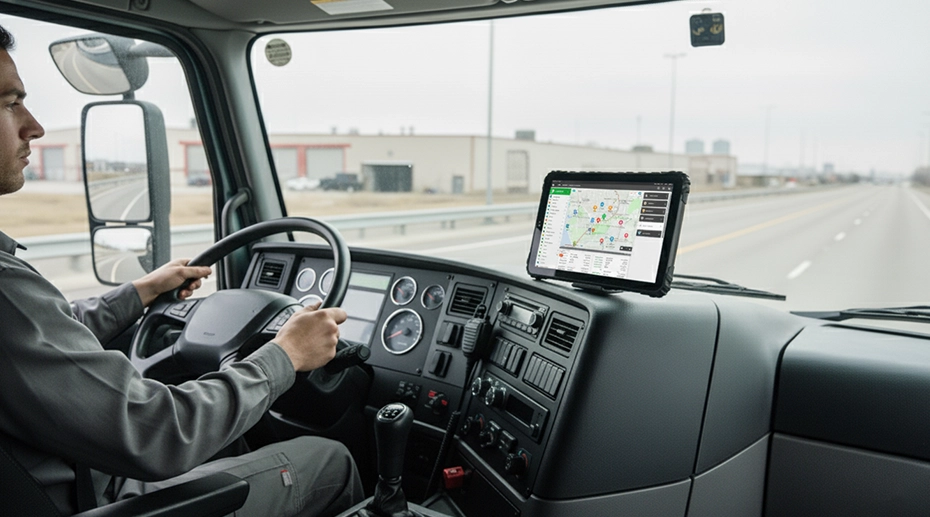
The logic seems straightforward: 1000 > 700, so Tablet A must be better outdoors. But fleet operators who have deployed both know this isn't true. In direct sunlight, the glossy 1000-nit panel becomes a mirror — the driver sees their own reflection, not the dispatch screen. The 700-nit anti-glare panel diffuses ambient light across its surface, preserving contrast even when the sun is directly overhead.
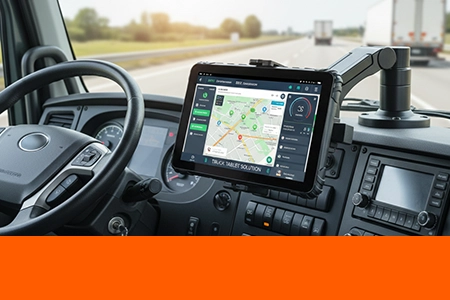
This is why MDT1080 ships with a 700-nit anti-glare IPS panel — not because 1000 nits wasn't achievable, but because 700 nits with anti-glare treatment delivers better real-world visibility for the environments where fleet tablets actually operate. For vehicle mount terminals and fleet management tablets, display selection is never just about peak brightness on a spec sheet.
Reflectance vs Brightness: Which One Actually Determines Outdoor Visibility?
Display visibility in sunlight is not determined by brightness alone. It's determined by the ratio of emitted light to reflected light — what display engineers call the effective contrast ratio under ambient illumination.
Here's a simplified calculation that explains why anti-glare matters more than peak brightness:
The result: A 700-nit anti-glare display achieves an effective contrast ratio of approximately 5.7:1 in direct sunlight — more than double the 2.4:1 of a 1000-nit glossy panel. The anti-glare treatment reduces reflected ambient light by nearly 80%, which matters more than the 300-nit difference in peak brightness.
This is why sunlight-readable rugged tablets for outdoor fleet use require both high brightness and effective anti-reflective treatment — neither alone is sufficient for reliable in-vehicle visibility across varying sun angles and cloud conditions.
The Hidden Cost of 1000 Nits: Power Draw, Heat, and Battery Life
Every 100-nit increase in display brightness comes with a measurable cost in power consumption and thermal output. In a sealed, IP67-rated tablet without active cooling, that heat has nowhere to go.
What 1000 Nits Costs in a Sealed Tablet
Battery Drain
Backlight consumes 40-60% of total system power at peak brightness. A 1000-nit panel can drain a 7600mAh battery 30% faster than the same panel at 700 nits — reducing a full shift of operation by 2-3 hours.
Thermal Buildup
LED backlights convert ~70% of electrical power to heat. At 1000 nits, the display assembly alone can add 5-8°C to the tablet's internal temperature — pushing the SoC closer to its thermal throttle point.
Performance Throttling
When internal temperature exceeds ~45°C, the SoC throttles CPU and GPU clocks. A tablet running at 1000 nits in a sunlit cab may actually run slower than the same device at 700 nits — defeating the purpose of the brighter display.
700 nits represents the thermal-power-visibility equilibrium point for passively-cooled rugged tablets. Above 700 nits, each additional 100 nits of brightness costs disproportionately more in power and heat than it delivers in perceived visibility improvement — a classic case of diminishing returns.
Where MDT1080 Fits: 5G, 700-Nit Anti-Glare, and the Upgrade from MDT1065
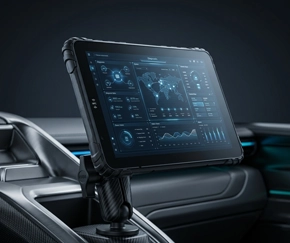
MDT1080 is the 5G evolution of the MDT1065 platform — and its display selection was a deliberate engineering decision, not a cost compromise. Here's how the two generations compare:
The display upgrade from MDT1065's 500-nit panel to MDT1080's 700-nit anti-glare panel represents a 40% increase in brightness combined with a ~80% reduction in reflected ambient light. For fleet operators upgrading from MDT1065, the outdoor visibility improvement is immediately noticeable — not because the screen is dramatically brighter, but because there's dramatically less reflection competing with the display content.
MDT1080 also adds 5G connectivity, doubles the memory to 8GB+128GB, upgrades to a 40MP camera with flash, and offers Android 16 — making it a generational leap beyond a simple display upgrade. For fleet management tablet deployments that need both outdoor visibility and high-bandwidth connectivity, MDT1080 is the current platform of choice.
A Practical Framework for Selecting Fleet Tablet Displays
When specifying tablets for fleet deployment, use this decision framework instead of comparing nits alone:
1. Ask About Reflectance, Not Just Nits
A spec sheet that says "1000 nits" but doesn't mention anti-glare treatment or reflectance percentage is incomplete. Request the surface reflectance specification — anything above 2% will cause visibility problems in direct sun.
2. Consider the Thermal Budget
If the tablet is sealed (IP67), passively cooled, and deployed in a sunlit vehicle cab, 700 nits with anti-glare will deliver more consistent performance over a full shift than 1000 nits that forces thermal throttling.
3. Test in Real Conditions, Not Under Showroom Lights
A 1000-nit glossy panel looks spectacular under indoor lighting. Take it outside at 2pm, mounted in a vehicle dock, and compare side-by-side with a 700-nit anti-glare panel before making the procurement decision.
Beyond 700 Nits: When Your Deployment Demands 1000 Nits with Anti-Glare
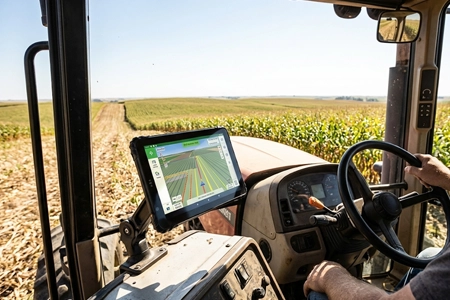
The 700-nit anti-glare panel on MDT1080 is the right choice for most fleet deployments — but some operating environments genuinely need more. Open-cab agricultural equipment under midday sun. Marine vessels with unobstructed sky reflection. Mining vehicles where dust accumulation on the screen compounds visibility loss. For these scenarios, 1000 nits with anti-glare treatment is not overkill — it's the minimum requirement for safe operation.
The critical distinction: these are not 1000-nit glossy panels. They're 1000-nit panels with the same anti-glare treatment that makes MDT1080's display effective outdoors — combining peak brightness with low reflectance. The physics is the same (effective contrast = emission ÷ reflection), but with a higher emission numerator that pushes the ratio even further in favor of visibility.
TOPICON's 1000-Nit Anti-Glare Fleet Tablets
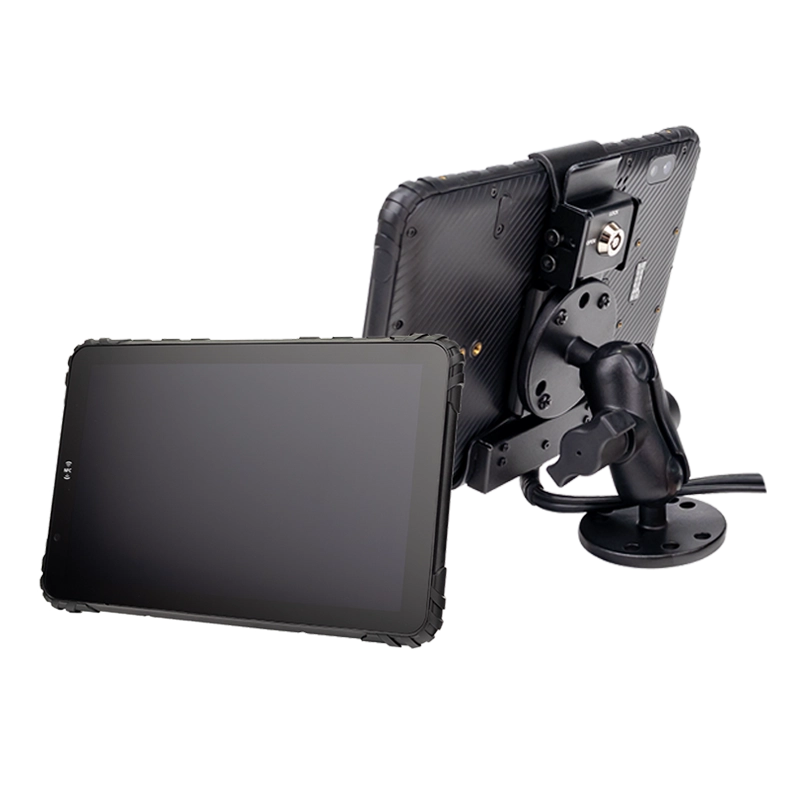
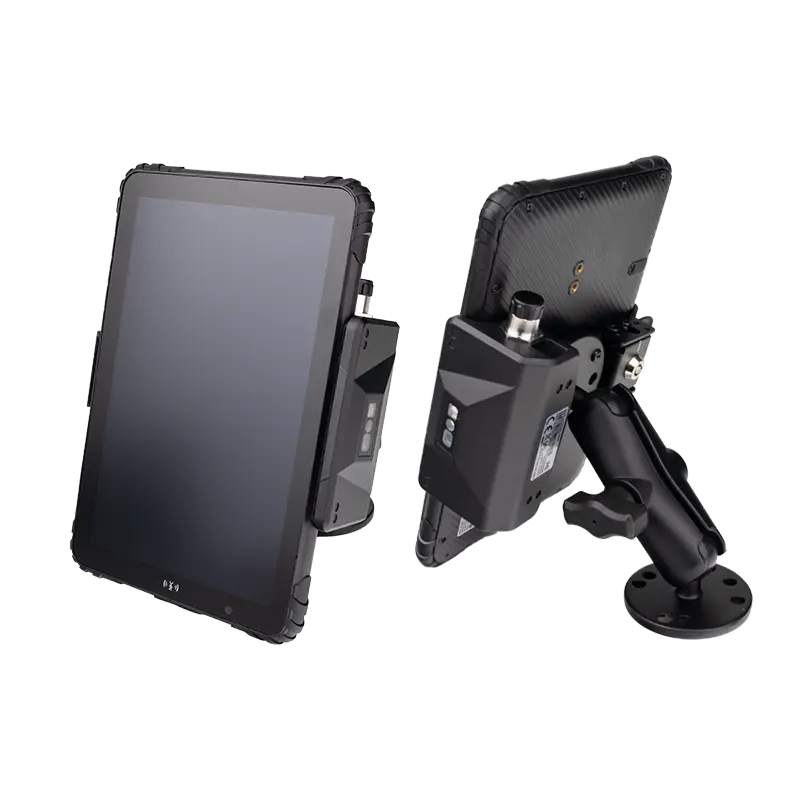
Both models feature the same anti-glare treatment as MDT1080 — the difference is peak brightness for extreme outdoor environments. For vehicle mount terminals that demand maximum sunlight visibility, MDT880 and MDT865 provide the highest brightness tier in the TOPICON fleet hardware lineup.
Single Point of Failure
A display that can't be read in sunlight is not a minor inconvenience — it's a single point of failure that disables every fleet application simultaneously. When the driver can't read the dispatch screen at a critical intersection, or the forklift operator misreads a warehouse location because of screen glare, the consequences cascade: missed deliveries, compliance violations, safety incidents. The display is the only component every fleet application depends on, every second of operation. Selecting it based on a single number on a spec sheet — without understanding reflectance, anti-glare treatment, and real-world visibility — is the most common and most avoidable hardware procurement mistake in fleet deployment.
Frequently Asked Questions
Is 700 nits considered a "sunlight-readable" display?
Yes. 700 nits combined with anti-glare coating is firmly in the sunlight-readable category for vehicle-mounted and outdoor industrial applications. The anti-glare treatment is the critical factor — a 700-nit AG panel will outperform a 1000-nit glossy panel in direct sunlight, as shown in the effective contrast comparison above.
Why did TOPICON choose 700 nits for MDT1080 instead of 1000 nits?
It was a deliberate engineering decision balancing three factors: outdoor visibility (anti-glare treatment matters more than peak brightness above 700 nits), thermal management (1000 nits generates significantly more heat in a sealed IP67 enclosure), and battery life (each additional 100 nits disproportionately increases power consumption). The 700-nit anti-glare panel on MDT1080 represents the optimal balance for full-shift fleet deployment.
Can I get a 1000-nit display on a TOPICON tablet if my deployment requires it?
Yes. For deployments with specific brightness requirements — such as open-cab agricultural equipment or marine applications — our MDT880 and MDT865 models offer 1000-nit displays. Contact our OEM team to discuss display configuration options for your specific operating environment.
How does MDT1080 compare to MDT1065 for fleet deployments?
MDT1080 upgrades MDT1065 in five key areas: display (700 nits anti-glare vs 500 nits), network (5G vs 4G), memory (8GB+128GB vs 4GB+64GB), camera (40MP vs 20MP), and OS (Android 14/16 vs Android 12/14). Both share the same 10" form factor, IP67 sealing, MIL-STD-810H certification, and -20°C to 60°C operating range. View MDT1080 full specs →
Specifying Fleet Tablets? Don't Let a Single Number Drive Your Display Decision.
MDT1080 combines a 700-nit anti-glare display with 5G connectivity, 8GB+128GB memory, and Android 14/16 — engineered for full-shift fleet visibility without thermal compromise. Available with OEM customization including private label branding, custom I/O, and MDM pre-configuration.