Best GPS Tracking Tablets for Fleet Management in 2026
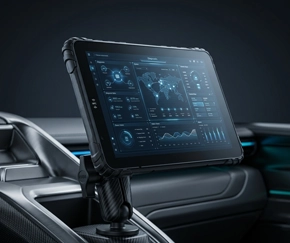
Choosing the best GPS tracking tablet for fleet management is not just about screen size or price. For commercial fleets, reliability, real-time tracking accuracy, and long-term durability are critical. This guide explains what to look for in a professional GPS tracking tablet — and when a rugged, vehicle-mounted solution becomes necessary.
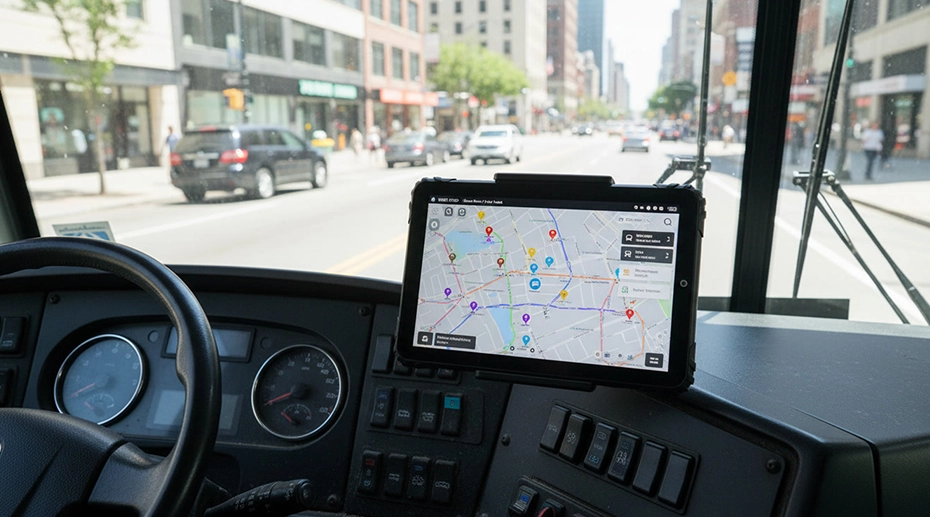
Table of Contents
1. What Is a GPS Tracking Tablet for Vehicles
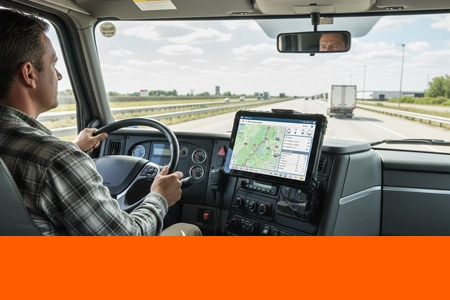
A GPS tracking tablet for vehicles is designed to provide real-time location tracking, navigation, and data communication within a moving vehicle. Unlike standard consumer tablets, these devices are often integrated with telematics systems and built for continuous operation. A purpose‑built GNSS tracking tablet delivers far more precise positioning than a smartphone, making it indispensable for logistics operations.
Applications:
Real-time vehicle tracking
Route navigation
Driver communication
Fleet data reporting
2. What Is a Fleet Tracking Tablet
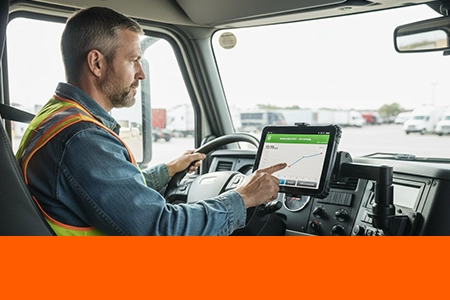
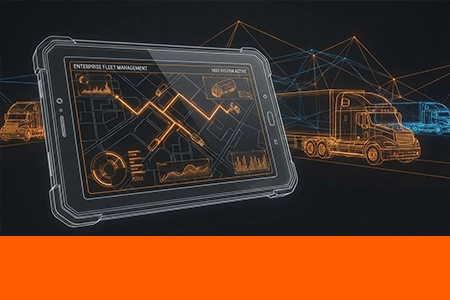
A fleet tracking tablet goes beyond single-vehicle navigation. It connects multiple vehicles into a centralized system, enabling dispatchers and operators to monitor, manage, and optimize fleet operations. When paired with a dedicated fleet operations computer, the tablet becomes the driver's primary interface for receiving jobs, confirming deliveries, and staying compliant.
Core Capabilities:
Multi-vehicle tracking
Dispatch & scheduling
Driver behavior monitoring
Integration with telematics platforms
3. Consumer Tablets vs Fleet Tracking Devices
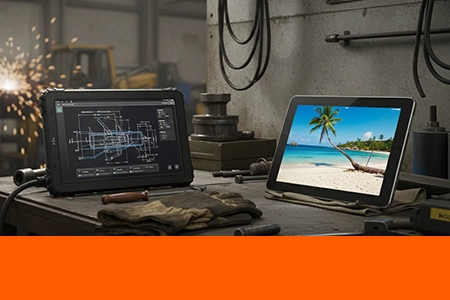
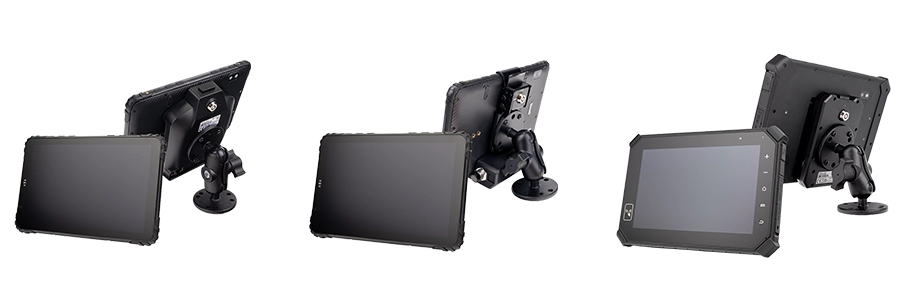
Many businesses initially consider consumer tablets due to their lower cost. However, real-world fleet environments quickly expose their limitations. A vehicle‑hardened tablet with docking is purpose‑engineered to survive constant vibration, temperature swings, and 24/7 operation — conditions that destroy consumer devices within months.
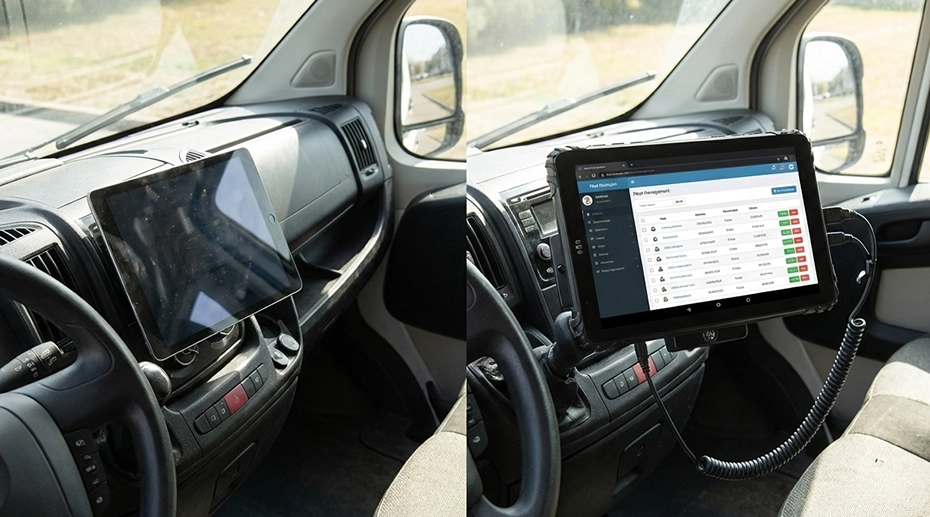
Purpose-built fleet devices offer significantly better reliability and lower long-term costs. Compare rugged GPS tablets →
4. Key Features to Look For in a GPS Tracking Tablet
Accurate GNSS Tracking
Reliable positioning in urban and remote environments — a multi‑constellation GNSS receiver locks onto GPS, GLONASS, Galileo, and BeiDou simultaneously for maximum accuracy

High-Brightness Display
Readable under direct sunlight in vehicle cabins

Vehicle Mount & Docking
Secure installation for long-term use

Connectivity
4G / WiFi / Bluetooth for real-time communication

Industrial Durability
Vibration, dust, water, and temperature extremes
Expandable Interfaces
CAN Bus, RS232, and other vehicle data connections — transforming the device into an integrated in‑vehicle data gateway
5. How to Choose the Right GPS Tracking Tablet
Not every fleet has the same requirements. Choosing the right device depends on your operational needs. For compliance‑heavy operations, an ELD‑integrated fleet terminal combines GPS tracking with automated driver logging to reduce inspection risk.
Small Fleets
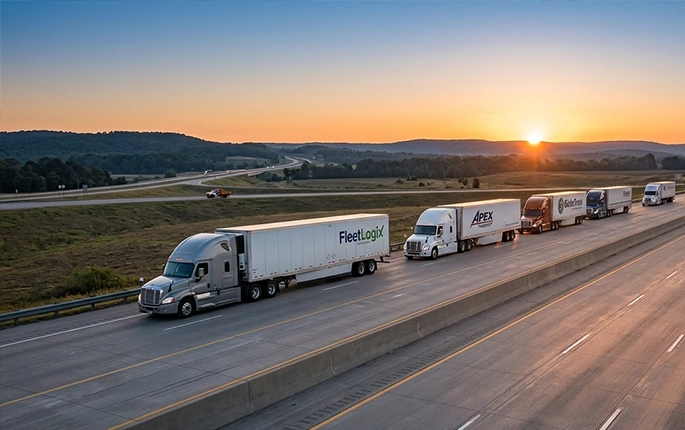
1–20 vehicles · Basic tracking & navigation
Medium Fleets
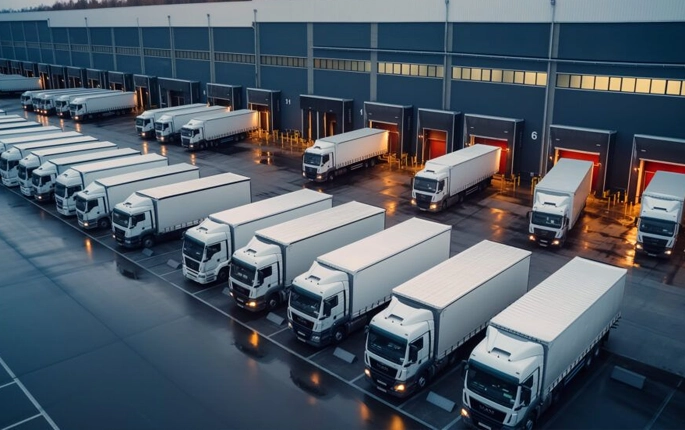
20–100 vehicles · Real-time monitoring, dispatch
Large Fleets
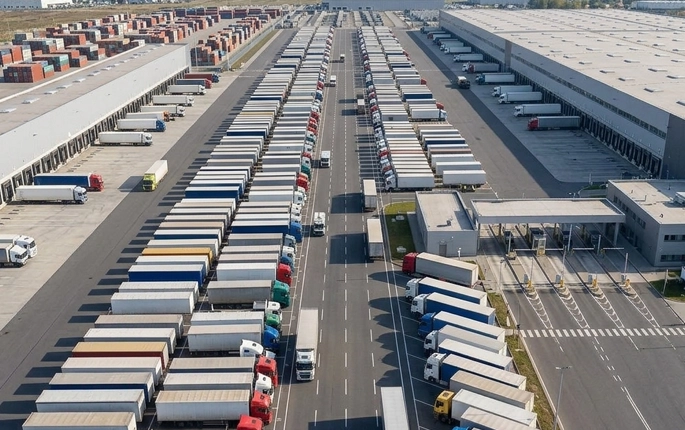
100+ vehicles · Telematics, MDM, scalable
6. When Do You Need a Rugged Tablet?
A rugged tablet becomes essential when operating conditions go beyond normal usage. For fleet‑wide rollouts, a heavy‑duty mobile data collection platform ensures consistent performance across every vehicle, regardless of operating environment.
High-Temperature Environments
Dashboard exposure in summer heat

Continuous Daily Operation
8+ hours of active use
Vehicle-Mounted Installation
Fixed in-cab docking required

Harsh Conditions
Dust, vibration, moisture exposure
In these scenarios, consumer tablets fail to deliver consistent performance. Deploy industrial rugged tablets →
7. From GPS Tracking to Fleet Telematics
Modern fleet management goes beyond GPS tracking. Advanced systems include route optimization, driver behavior analysis, remote diagnostics, and real-time data integration. A fully connected vehicle computing unit processes all of this data at the edge, reducing cloud dependency and improving responsiveness.
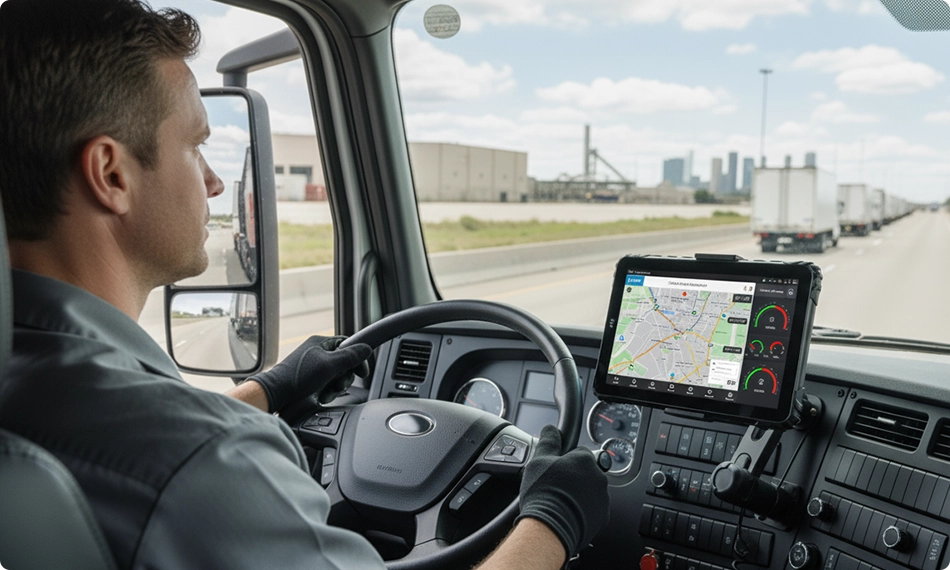
Advanced Telematics Capabilities:
Route optimization
Driver behavior analysis
Remote diagnostics
Real-time data integration
A dedicated fleet tracking tablet is the hardware foundation for these systems. Source telematics‑ready tablets →
8. FAQ
What tablet is best for GPS tracking?
It depends on your use case. Consumer tablets may work for basic navigation, but fleet operations typically require rugged, vehicle-mounted devices with dedicated GNSS. Source vehicle tracking tablets →
Can Android tablets be used for fleet tracking?
Yes, especially when integrated with telematics platforms and MDM systems. Deploy Android rugged tablets →
Do I need a rugged tablet for vehicles?
If your devices are used daily in vehicles, rugged tablets are strongly recommended for their durability and long-term cost savings. Browse vehicle mount tablets →
What is the difference between GPS tracking and telematics?
GPS tracking provides location data, while telematics includes broader vehicle and driver data integration for comprehensive fleet management. Compare GPS tracking solutions →
Choose Reliability, Not Just Features
Choosing the best GPS tracking tablet is about reliability, scalability, and long-term performance in real fleet environments. Equip your fleet with high‑precision GPS hardware →
Related Fleet & GPS Tracking Resources