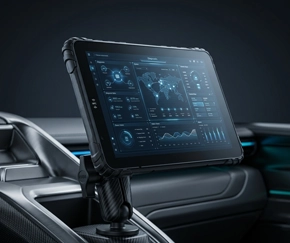
Cold Chain Fleet Tablets — Why CAN Bus and RS232 Matter for Real-Time Temperature Monitoring
A refrigerated trailer carrying pharmaceutical product loses temperature data the moment the Bluetooth connection between a consumer truck tablet and a wireless sensor drops. The sensor continues logging internally, but the cab display shows nothing. The driver has no visibility. The fleet manager receives no alert. The cargo warms silently. Cold chain compliance requires a different hardware architecture — one where temperature data travels through wired connections, not radio links.
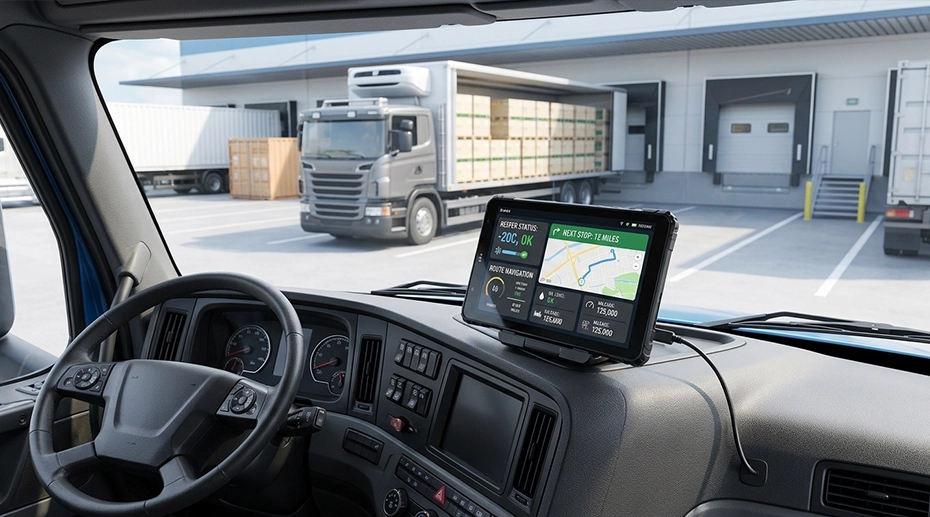
Table of Contents
Field Observation
Cold chain fleet operators report three recurring failure patterns when consumer-grade monitoring solutions are deployed:
Consumer tablets overheat in the cab while the refrigeration unit runs continuously outside
USB-powered devices drain the vehicle battery because the tablet cannot be ignition-sensed
About the Author
TOPICON Hardware Engineering Team
Specialists in cold chain vehicle computing, CAN Bus and RS232 sensor integration, and temperature monitoring hardware for pharmaceutical, food, and chemical transport fleets across North America and Europe.
Why Wireless Monitoring Fails in Cold Chain Operations
Bluetooth and WiFi are designed for open spaces. A refrigerated trailer is a metal box lined with insulation. When the driver closes the rear door, the cargo area becomes a Faraday cage — radio signals from inside the trailer attenuate dramatically. The temperature sensor may be five metres from the cab, but the signal path passes through a steel door, insulated panels, and a refrigeration unit that generates its own electromagnetic noise. The result is intermittent connectivity: the sensor connects when the door is open, drops when it closes, and reconnects sporadically as the vehicle moves.
For a food delivery operation, a 20-minute gap in temperature logging may be acceptable. For a pharmaceutical shipment under FDA FSMA or EU GDP (Good Distribution Practice) regulations, it is not. The compliance record must be continuous. A gap in the temperature log is not a technical issue — it is a compliance violation that can invalidate the entire shipment.
The vehicle tablet that serves as the cold chain monitoring hub must therefore support wired sensor interfaces. Not as an optional accessory — as the primary data path.
CAN Bus J1939: Reading the Refrigeration Unit Directly
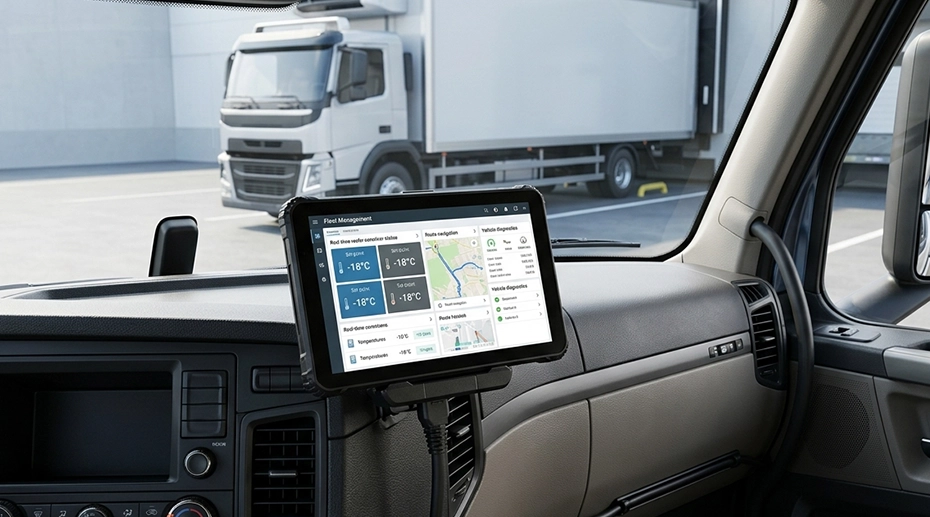
Modern refrigeration units — Carrier Transicold, Thermo King, and similar — expose operating data through the vehicle's J1939 CAN Bus network. Set point temperature, return air temperature, supply air temperature, fuel level, and alarm codes are broadcast as standard CAN messages. A tablet with native J1939 support can read this data stream directly from the vehicle's wiring — no external gateway, no Bluetooth adapter, no wireless sensor.
The connection is physical. The tablet's CAN Bus transceiver is wired into the vehicle's diagnostic network through the docking station. The data arrives continuously, at the rate the refrigeration unit broadcasts it, regardless of door position, trailer contents, or electromagnetic interference. The CAN Bus tablet hardware is the monitoring instrument — not a display for a separate wireless sensor.
This architecture also provides alarm visibility. If the refrigeration unit triggers an alarm — high temperature, low fuel, door open — the CAN Bus message arrives at the tablet instantly. The tablet can sound an audible alert, display a visual warning, and transmit the event to the fleet management backend over 4G/5G. The driver knows within seconds. The fleet manager knows within the same update cycle. The response time is measured in seconds, not the minutes or hours of a wireless sensor that has silently disconnected.
RS232/RS485: The Wired Path for Additional Sensors
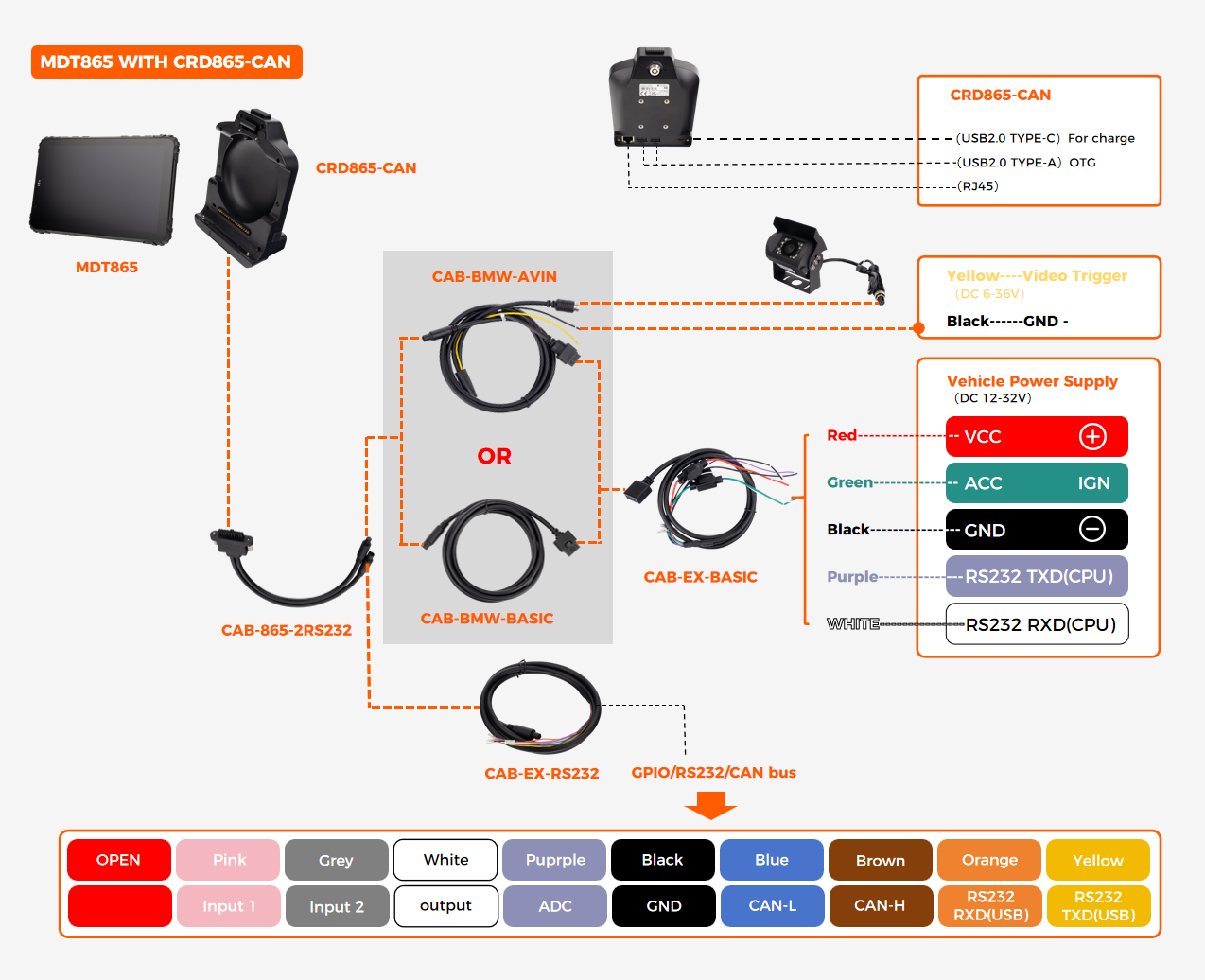
CAN Bus covers the refrigeration unit, but cold chain fleets often need additional sensor inputs that are not on the vehicle network. Door switches that verify the trailer is sealed. Multi-point temperature probes placed at different positions in the cargo area. Humidity sensors for high-value goods. These devices typically communicate over RS232 or RS485 — the same serial interfaces used by industrial equipment for decades.
A tablet with RS232 serial interface hardware can connect these sensors directly — through the dock, through a serial cable, through a wired connection that cannot drop. The data arrives continuously. The tablet aggregates CAN Bus refrigeration data and RS232 sensor data into a single monitoring stream, then uploads it to the fleet backend through the cellular connection.
This is the architecture that pure wireless solutions cannot replicate. A Bluetooth sensor is a standalone device that must be paired, charged, and kept in range. A wired RS232 sensor draws power from the tablet's serial port or the vehicle's electrical system, requires no pairing, and maintains its connection indefinitely.
LoRa Module: Complementary Solution for Cold Chain Remote Temperature Sensors
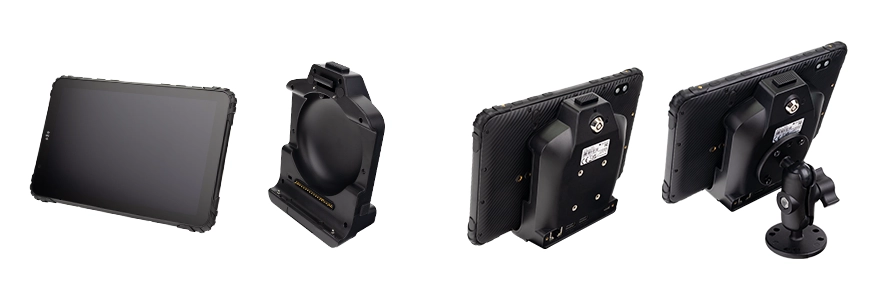
For scenarios where wiring is not possible or multi-point remote monitoring is required, MDT880 and MDT865 support an optional LoRa module that connects wirelessly to temperature sensors. Unlike Bluetooth, LoRa operates in the sub-GHz band, offering strong wall penetration — signals can pass through the metal and insulation of a refrigerated trailer with coverage up to several hundred meters. LoRa sensors can be placed at different positions inside the cargo area, transmitting data directly to the tablet in the cab, which aggregates and displays it through the CAN Bus tablet. For projects requiring RS232 serial tablet integration with LoRa receiver modules, TOPICON provides hardware customization support through RS232 serial tablet solutions.
The Cold Chain Hardware Architecture in Practice
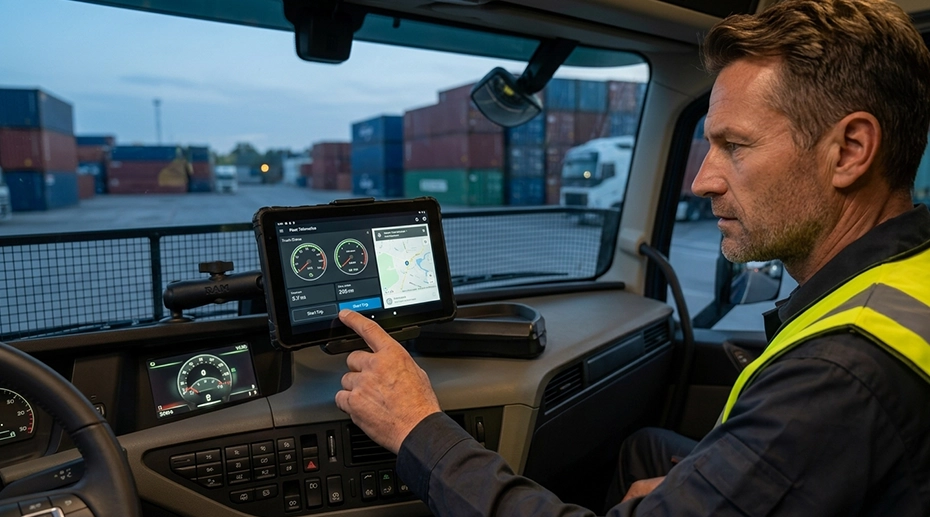
In a typical cold chain deployment, the in-vehicle tablet for fleet computing serves as the data aggregation point. The refrigeration unit broadcasts J1939 data on the vehicle CAN Bus. Door switches and temperature probes connect through RS232 or RS485. For remote sensors that cannot be wired, a LoRa module provides a sub-GHz wireless link that penetrates insulated trailer walls — unlike Bluetooth. The tablet reads all streams, combines them with GPS location and time stamps, and uploads the complete record to the fleet backend. The driver sees set point, actual temperature, alarm status, and door state on a single screen.
The data flow is continuous. No pairing drops. No disconnects. No data gaps. When the fleet manager pulls the temperature log for an FDA audit, every minute of the journey is accounted for — from the moment the cargo was loaded to the moment the trailer door opened at the destination.
The MDM platform manages the entire deployment remotely. Firmware updates, configuration changes, and kiosk mode enforcement are pushed over the air through the TOPICON MDM console. If the fleet manager needs to update the temperature threshold that triggers an alert, the change reaches every tablet in the fleet without a depot visit.
Single Point of Failure
The Bluetooth connection between a consumer tablet and a wireless temperature sensor is the single point of failure that can invalidate a pharmaceutical shipment. The sensor is inside the trailer. The tablet is in the cab. The steel door closes. The signal drops. The driver sees a dashboard that shows no data and assumes the system is working. The fleet manager sees a backend that has stopped updating and assumes the vehicle is parked. The cargo warms silently. Hours later, the sensor reconnects and uploads its internal log — the gap is discovered too late to save the shipment. A wired architecture does not have this gap. A LoRa architecture does not have this gap. Bluetooth does.
Frequently Asked Questions
Why does a refrigerated trailer block Bluetooth signals?
A refrigerated trailer is essentially a steel box with insulated walls. The steel acts as a Faraday cage, attenuating radio signals. The insulation further reduces signal strength. When the rear door closes, the signal path between a sensor inside the trailer and a tablet in the cab becomes blocked. Bluetooth signals in the 2.4 GHz band are particularly susceptible to this attenuation. A wired connection — CAN Bus or RS232 — does not depend on radio propagation and remains active regardless of door position.
Can a tablet read refrigeration unit data directly via CAN Bus?
Yes, if the refrigeration unit broadcasts data on the vehicle's J1939 network. Carrier Transicold and Thermo King units expose set point, actual temperature, alarm codes, and fuel level through standard J1939 messages. A tablet with native CAN Bus support reads this data directly from the vehicle wiring. No external gateway. No Bluetooth adapter. No wireless sensor.
How does RS232 connect to temperature sensors in the cargo area?
RS232 uses a dedicated wired connection — typically a shielded cable running from the sensor to the tablet's serial port through the dock. The sensor draws power from the serial connection or the vehicle's electrical system. There is no pairing process, no battery to charge, and no signal to drop. The data arrives continuously for as long as the cable remains connected. This is the same industrial serial interface used for decades in process control and instrumentation.
Does the MDT880/MDT865 support LoRa for wireless temperature sensors?
Yes. MDT880 and MDT865 support an optional LoRa module that connects to wireless temperature sensors placed inside the refrigerated trailer. LoRa operates in the sub-GHz band, which penetrates insulated trailer walls far better than Bluetooth or WiFi. The sensor data is received by the tablet and aggregated with CAN Bus and RS232 data into a single monitoring stream. For custom LoRa integration projects, contact our OEM team →
Can cold chain monitoring be integrated with MDM for remote management?
Yes. The TOPICON MDM server pushes configuration changes — temperature thresholds, alert rules, reporting intervals — to every tablet in the fleet without a depot visit. Firmware updates are applied over the air. Kiosk mode locks the tablet to the monitoring application, preventing the driver from closing it. The complete temperature record, including GPS time stamps, is uploaded to the fleet backend continuously and available for audit export.
Deploying Cold Chain Monitoring? The Data Path Must Be Wired, Not Bluetooth.
CAN Bus J1939 reads the refrigeration unit directly. RS232/RS485 connects additional sensors through physical cables. LoRa handles remote sensors that cannot be wired. The tablet aggregates all streams, time-stamps them with GPS, and uploads the continuous record to the fleet backend. No Bluetooth gaps. No data loss. No compliance violations.
Related Cold Chain & Hardware Resources