GDPR and Fleet Tablet Data Management — What the Regulation Means for Hardware Architecture
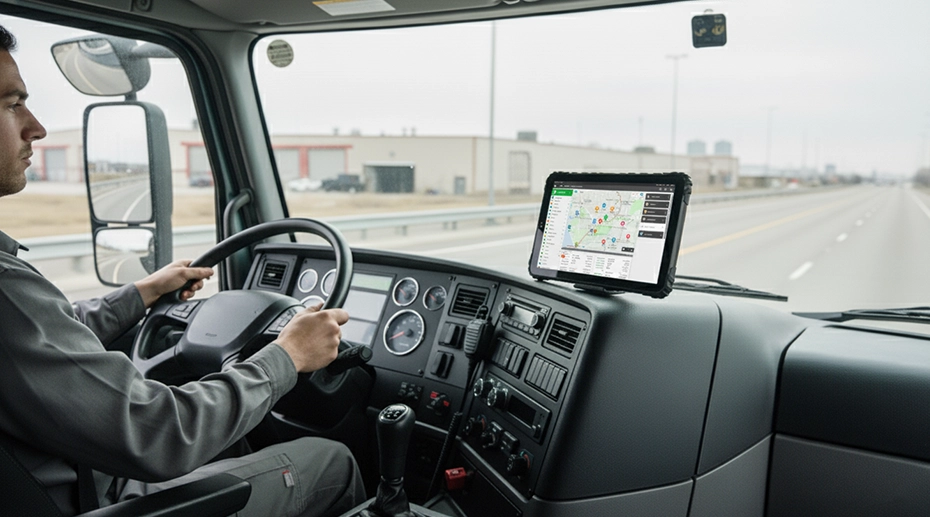
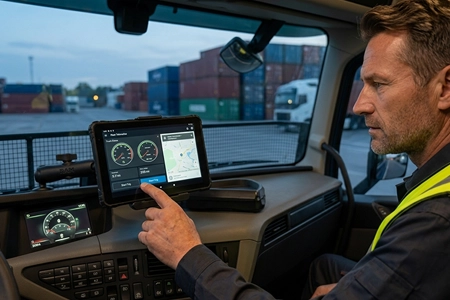
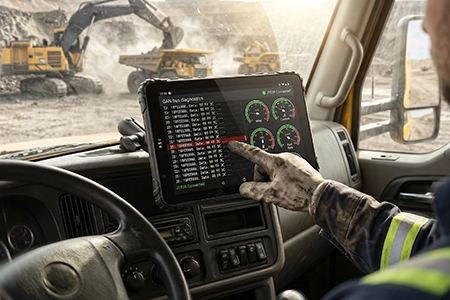
A European fleet operator discovers that a vehicle tablet installed in a delivery van has been stolen. The device contains three months of driver location data, hours-of-service records, and camera footage of loading areas. Under GDPR, this is a reportable data breach. Whether the operator can remotely erase the device — and prove that the erasure was completed — depends entirely on the hardware architecture and the MDM platform managing it.
Field Observation
GDPR compliance for fleet hardware is rarely addressed during procurement. Fleet operators purchase tablets, install them, and only discover the compliance gap when something goes wrong:
Camera footage stored locally with no access control or retention policy
Driver GPS data retained indefinitely without lawful basis
About the Author
TOPICON Hardware Engineering Team
Specialists in fleet device security, MDM remote management, and GDPR compliance architecture for European fleet operators and system integrators.
What GDPR Actually Says About Fleet Data
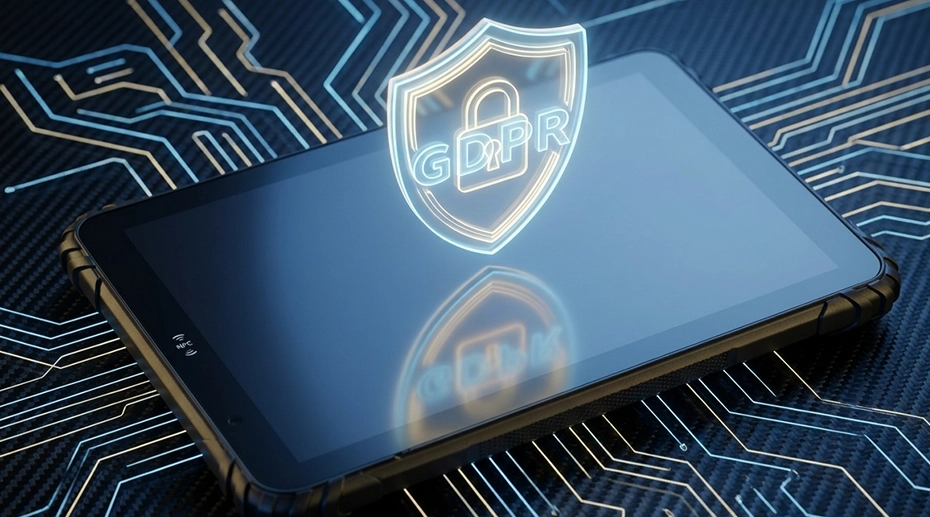
GDPR classifies any information that can identify a living person as personal data. In a fleet context, this includes driver location, working hours, driving behaviour patterns, camera footage that captures faces or licence plates, and even vehicle telemetry when it is linked to a specific driver. The fleet operator is the data controller. The tablet is a data collection endpoint. The MDM platform is the control plane that must enforce access, retention, and deletion policies.
Three GDPR obligations are directly affected by hardware selection:
1. Data Minimisation
Collect only the data necessary for the stated purpose. A tablet that records GPS every second when the driver is off-duty collects excessive data. The MDM must support granular configuration of what is logged, when, and for how long.
2. Security of Processing
Data must be protected against unauthorised access, loss, or destruction. This requires encrypted storage on the device, encrypted transmission to the backend, and the ability to remotely erase the device if it is lost or stolen.
3. Accountability
The operator must be able to demonstrate compliance. This means audit logs showing who accessed what data, when, and why. The MDM platform must provide tamper-evident audit trails that survive scrutiny from supervisory authorities.
For a fleet management tablet deployed in European operations, the hardware is not neutral infrastructure. It is a data processing device. Its specifications determine whether the operator can meet GDPR obligations in practice, not just on paper.
The MDM Platform Is the Compliance Control Plane
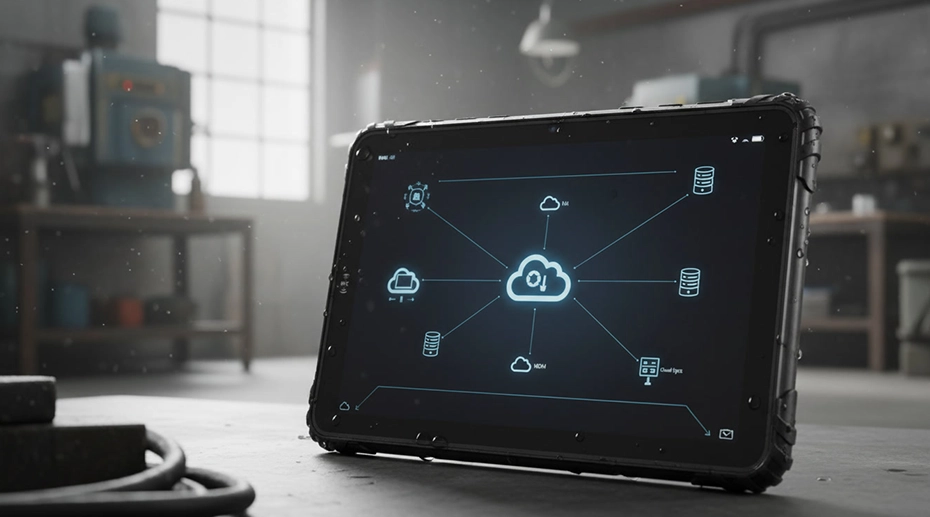
Remote data erasure is the most direct GDPR requirement with a hardware dependency. If a device is lost or stolen, the operator must be able to erase it remotely — and prove that the erasure command was issued and executed. The TOPICON MDM platform provides this capability through a web console hosted on TOPICON's infrastructure. The administrator issues the erasure command, the device receives it on the next network connection, and the command is logged with a timestamp in the server's audit trail.
But the MDM can only erase what it can reach. A device that is powered off and never reconnected cannot be erased. This is where hardware architecture matters: a tablet with an internal battery that holds charge for days remains reachable for longer than one that drains in hours. A dock that charges the device while parked extends the window during which a remote erasure command can be delivered. The hardware determines the reachability window.
Beyond erasure, the MDM enforces security policies that reduce the likelihood of a breach in the first place. Kiosk mode locks the device to approved applications, preventing the driver from installing personal apps that might exfiltrate data. App allowlisting ensures that only fleet-approved software runs. Screen lock policies enforce authentication before anyone can access the device's contents. These policies are configured centrally and pushed to the entire fleet — the MDM platform for fleet devices is the mechanism that converts a GDPR policy document into an enforced technical control.
Fixed Terminal vs Detachable Tablet: A Data Security Tradeoff
The physical form factor affects GDPR compliance in ways that are not immediately obvious. A fixed terminal bolted permanently into the cab is difficult to steal. Its data remains in the vehicle, under the operator's physical control. But it is also difficult to remove for maintenance, which means data may be retained on the device for longer than necessary.
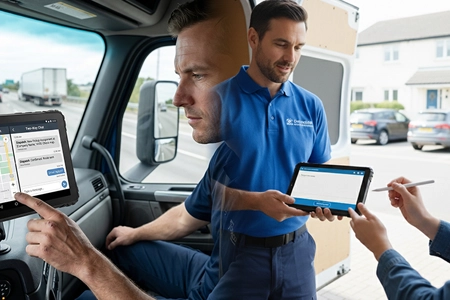
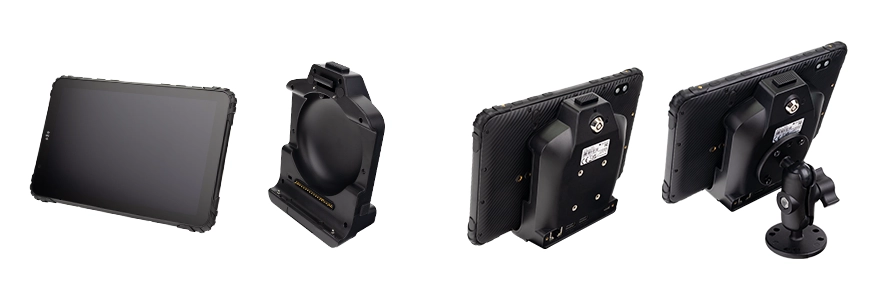
A detachable tablet with a quick-release dock designed for daily undocking leaves the vehicle with the driver. This introduces a different risk profile: the device is more likely to be lost or stolen outside the cab. But the quick-release design also enables a compensating control — the driver can take the device indoors overnight, reducing the theft window. And because the device is personal equipment in hot-desking fleets, its data is logically isolated from other drivers' data through separate user sessions and MDM profiles.
There is no universally correct answer. The hardware architecture must match the operator's risk assessment and GDPR compliance strategy. The key requirement is that whichever form factor is selected, the device must be enrolled in an MDM platform that provides remote erasure, policy enforcement, and audit logging. A tablet without MDM is a GDPR liability regardless of its physical form.
Single Point of Failure
A stolen tablet with driver data and no remote erasure is a single point of failure that converts a property loss into a regulatory investigation. The data on the device — three months of GPS tracks, driver hours, and camera footage — is personal data under GDPR. If the operator cannot erase it remotely, the theft becomes a reportable data breach. The supervisory authority will ask what technical measures were in place to protect the data. If the answer is "none," the fine is not for the theft. It is for the failure to implement appropriate security measures. The hardware architecture — tablet + MDM — is the difference between a missing device and a data breach.
Frequently Asked Questions
Does GDPR require fleet tablets to have remote erasure capability?
GDPR requires that personal data be protected against unauthorised access and loss. If a device containing driver data is stolen, the operator must be able to demonstrate that appropriate technical measures were in place. Remote erasure through an MDM platform is the standard technical control for this scenario. Without it, the operator faces the challenge of explaining to a supervisory authority how the data was protected.
How does kiosk mode support GDPR compliance?
Kiosk mode restricts the device to approved applications, preventing drivers from installing unauthorised software that could access or exfiltrate fleet data. It also prevents drivers from accessing system settings where they might disable security controls. From a GDPR perspective, kiosk mode enforces data minimisation and access restriction at the device level — the data is only accessible through the applications the operator has approved.
What audit trail capabilities are required for GDPR compliance?
The operator must be able to demonstrate who accessed fleet data, when, and for what purpose. The TOPICON MDM platform logs all administrative operations — firmware updates, configuration changes, remote erasure commands, user access — with timestamps and operator identifiers. These logs are exportable and form the basis of the operator's GDPR accountability documentation.
Can fleet tablets be configured to minimise data collection?
Yes. The MDM platform controls what data the tablet logs and transmits. GPS sampling rate, camera recording triggers, and telemetry upload frequency are all configurable. A fleet can set the tablet to record GPS at one-minute intervals during driving and stop entirely when the engine is off — implementing GDPR's data minimisation principle at the hardware configuration level, not just in the privacy policy.
Deploying Fleet Tablets in the EU? GDPR Compliance Starts with the Hardware Architecture.
Encrypted storage, remote erasure, kiosk mode enforcement, and audit logging — these are hardware capabilities, not policy documents. Combined with the TOPICON MDM platform, they give fleet operators the technical controls that GDPR requires.