Why Aviation Connectors Replace USB in Fixed Vehicle Terminals – M9 Connectors Explained
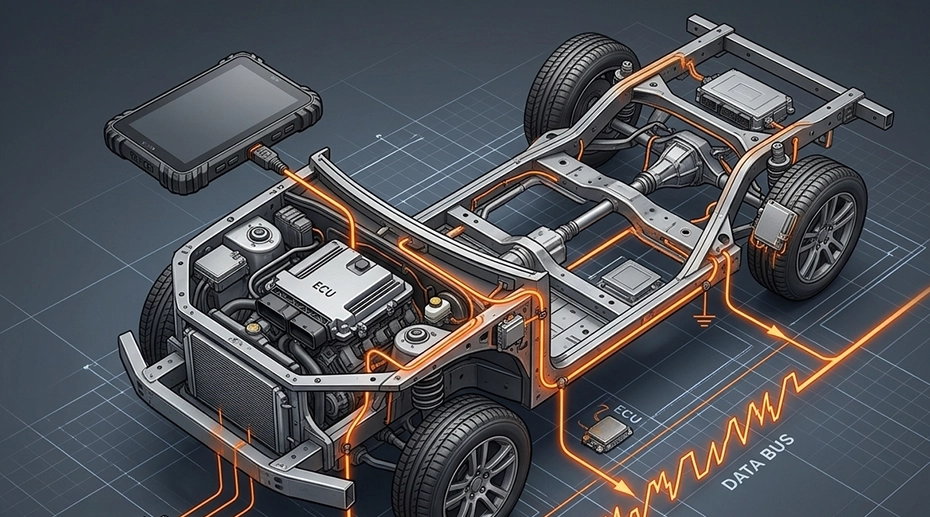
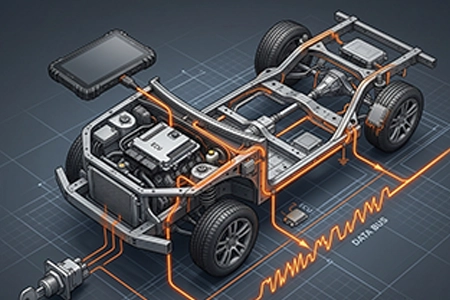
USB connectors were designed for office environments — plug in once, unplug occasionally, minimal vibration. In a fixed vehicle installation, that same connector becomes the single most likely point of failure. M9 aviation connectors are engineered specifically for this environment: threaded locking, IP67 sealing, and multi-pin integration that consolidates power, CAN Bus, RS232, and Ethernet into a single vibration-proof interface.
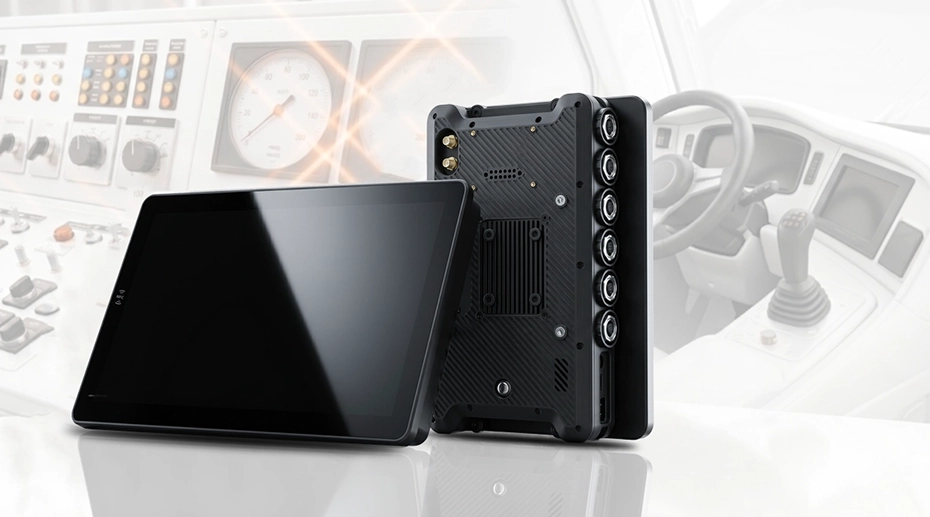
Table of Contents
The Connector Is the Weakest Link
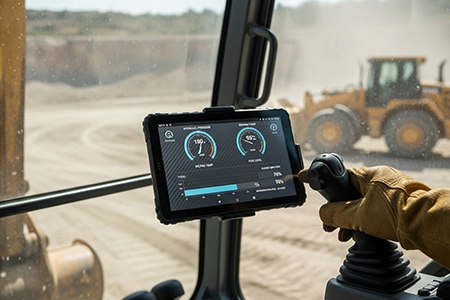
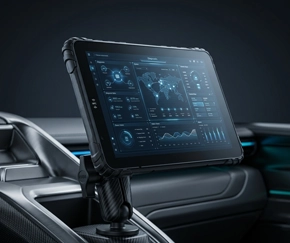
In a fixed vehicle installation — a bus console, a mining truck dashboard, an industrial control cabinet — the tablet or panel PC is permanently mounted. It is never removed. It runs 24/7 for years. Every component is engineered for this: the processor, the power supply, the display, the housing. Except one.
The connector.
USB connectors are the default interface on most computing devices. They were designed for consumer electronics — plug in a keyboard, charge a phone, connect a flash drive. The design brief assumed infrequent mating cycles in a stationary, climate-controlled environment. Sustained vehicle vibration, dust, moisture, and temperature cycling were not part of the specification.
Under vehicle conditions, a standard USB connector fails in predictable ways: fretting corrosion at the contact points from micro-motion during vibration, contact relaxation from thermal cycling, debris ingress into the unsealed connector body, and cable strain relief failure at the connector backshell. A USB connector that works perfectly on a desk can produce intermittent data errors, power dropouts, and eventual complete failure within months of vehicle installation — not because the USB design is poor, but because the environment exceeds its design envelope.
Key takeaway: The connector is not an accessory. In a fixed vehicle installation, the connector is the interface between the computing platform and the vehicle — and its failure mode is the failure mode of the entire system.
Aviation Connector vs USB — The Physics of Reliability
The difference is not about data speed or pin count. It is about mechanical design philosophy.
USB: Designed for Consumer Convenience
Friction-fit retention — no locking mechanism. Rectangular form factor with exposed contacts. Minimal environmental sealing. Designed for approximately 1,500-5,000 mating cycles in benign conditions. Under vehicle vibration, the friction fit allows micro-motion between contact surfaces, producing fretting corrosion that increases contact resistance over time. Thermal cycling loosens the fit further. There is no strain relief for the cable beyond the molded boot.
M9 Aviation Connector: Designed for Permanent Installation
Threaded locking ring — cannot vibrate loose. Circular pin layout with gold-plated multi-point contacts for consistent impedance. IP67 rated when mated — fully sealed against dust and water. Rated for 10,000+ mating cycles. Cable strain relief integrated into the connector body. The threaded coupling maintains constant contact pressure regardless of vibration amplitude or thermal expansion. This is the same connector philosophy used in aircraft, military vehicles, and industrial machinery — environments where a disconnected cable is not an inconvenience but a safety risk.
Industry context: GX16 and M12 connectors follow the same design philosophy as M9 — threaded coupling, IP-rated sealing, industrial mating cycles — and are widely used in heavy vehicle, marine, and industrial automation applications. M9 represents a more compact form factor within this connector family, suited to space-constrained fixed installations.
When USB Still Works — Docked Tablet Architecture
USB is not inherently unreliable. It is unreliable when used outside its design envelope.
Docked Architecture: USB Works Here
When a tablet is docked, the physical connection to the vehicle is handled by the docking station — typically using pogo-pin contacts rated for 10,000+ cycles with consistent contact pressure. The USB ports on the tablet itself are used only occasionally, when the tablet is undocked. The vehicle interface — power, CAN Bus, external antennas — routes through the dock, not through the tablet's USB port. In this architecture, USB is used within its design envelope: low-cycle, low-vibration, occasional connection.
Fixed Architecture: USB Fails Here
When a terminal is permanently bolted into a dashboard or control cabinet, every cable connection is permanent. The USB port is the vehicle interface — it carries power, data, and peripheral connections continuously for years. Every vibration cycle produces micro-motion at the contact interface. Every temperature swing expands and contracts the connector. Over months, the cumulative effect is contact degradation that produces intermittent faults, then permanent failure. This is the exact scenario that aviation connectors were designed to eliminate.
Engineering principle: Choose the connector architecture based on the installation architecture. Docked tablets can use USB safely because the vehicle interface is handled by the dock. Fixed terminals need aviation connectors because the vehicle interface is the connector — and it must survive years of continuous vibration without maintenance.
Installation Architecture — Fixed vs Docked
Two architectures, two connector strategies — how to choose based on vehicle type and operational workflow
Fixed Installation with M9 Connectors
Best for: Bus consoles, mining trucks, industrial HMI panels, control cabinets, train cabs.
Why: The terminal is permanently mounted — bolted to a VESA plate, a panel cutout, or a RAM mount that is adjusted once and locked. The M9 connectors are threaded in place and never disconnected outside of scheduled maintenance. The connector becomes part of the vehicle wiring harness.
Connector strategy: M9 aviation connectors with threaded locking. All vehicle interfaces — power, CAN Bus, RS232, Ethernet — consolidated into M9 connectors that maintain constant contact pressure regardless of vibration.
Docked Installation with Pogo-Pin Dock
Best for: Truck fleets, delivery vans, forklifts, field service vehicles.
Why: The tablet is frequently undocked — for inspections, signature capture, shift changes, or off-vehicle data entry. The docking station handles vehicle power, CAN Bus, and external antennas through pogo-pin contacts. USB ports on the tablet are used only when undocked.
Connector strategy: Pogo-pin dock for vehicle interface (10,000+ cycles, constant contact pressure). USB on tablet for occasional peripheral use only. Explore vehicle mount tablet solutions →
M9 in TOPICON Fixed Vehicle Terminals
Purpose-built Android Panel PCs with M9 aviation connectors for permanent vehicle and industrial installations
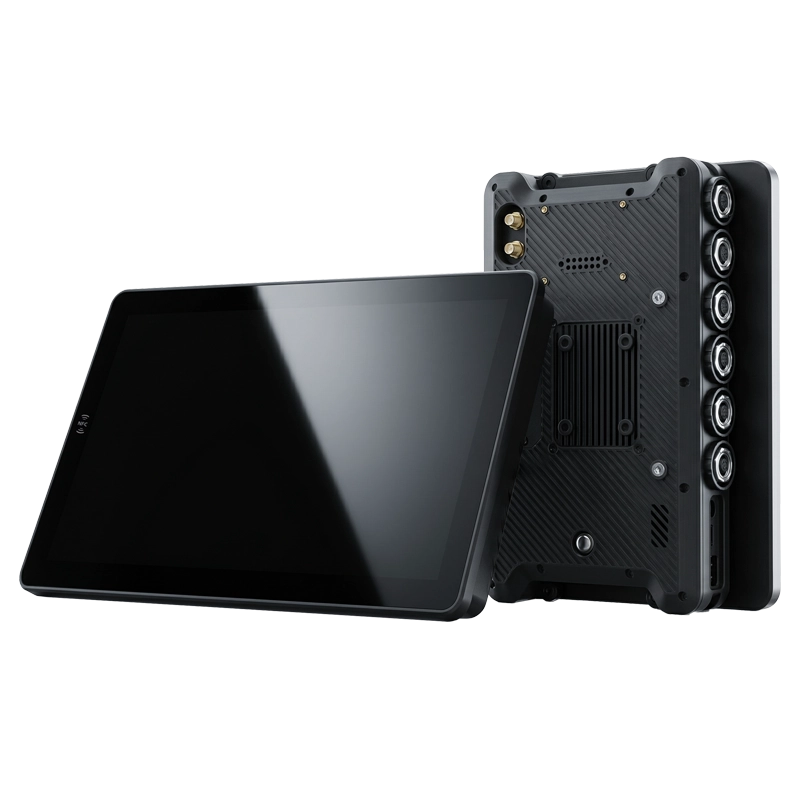
PC1080
8" Android Panel PC · 6× M9 Connectors
✓ 6× M9: Power · USB · RS232 · RS485 · CAN · Ethernet
✓ 4G · WiFi · GPS · LTE-M · GPIO
✓ VESA Mount · IP67 Sealed
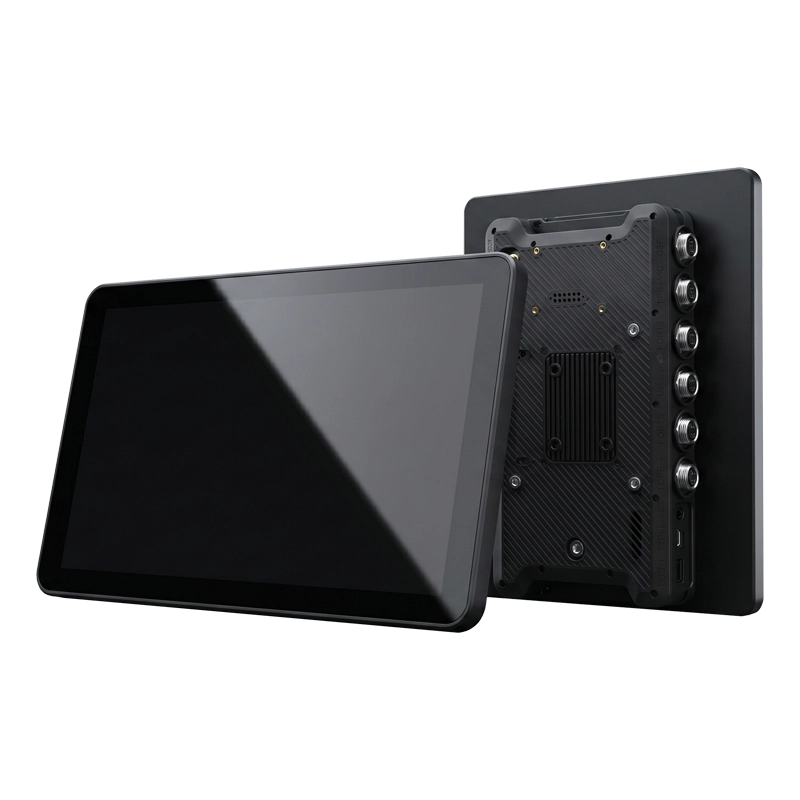
PC1090
10" Android Panel PC · 6× M9 Connectors
✓ 6× M9: Power · USB · RS232 · RS485 · CAN · Ethernet
✓ 4G · WiFi · GPS · LTE-M · GPIO
✓ VESA Mount · IP67 Sealed
Both models run Android 16 with the same OS, same MDM, and same SDK as TOPICON's vehicle mount terminals. For OEM customization — custom I/O pinout, branding, firmware — contact our engineering team →
Frequently Asked Questions
Why do USB connectors fail in fixed vehicle installations?
USB connectors rely on friction fit without a locking mechanism. Under sustained vehicle vibration, micro-motion between contact surfaces produces fretting corrosion, increasing contact resistance. Thermal cycling loosens the fit further. Over months of continuous operation, this leads to intermittent data errors and eventual connector failure.
What makes M9 connectors more reliable than USB for vehicle installations?
M9 aviation connectors use a threaded locking ring that maintains constant contact pressure regardless of vibration. They are IP67 sealed against dust and water, rated for 10,000+ mating cycles, and integrate cable strain relief into the connector body. The circular pin layout with gold-plated contacts ensures consistent impedance across all pins.
Can a single M9 connector carry power, CAN Bus, and RS232 simultaneously?
Yes. M9 connectors are available in multi-pin configurations. TOPICON Panel PCs use 6× M9 connectors to consolidate all vehicle interfaces — power, USB, RS232, RS485, CAN Bus, and Ethernet — into individual threaded, sealed connections. Each pin is assigned to a specific signal, and the threaded coupling ensures all connections are maintained simultaneously.
When should I choose a fixed terminal with M9 connectors vs a docked tablet?
Choose a fixed terminal with M9 connectors when the device is permanently installed — bus consoles, mining trucks, industrial control cabinets, train cabs. Choose a docked tablet when the device needs to be frequently removed — truck fleets with shift changes, delivery vans requiring off-vehicle signature capture, field service inspections.
Can the M9 pinout be customized for specific OEM projects?
Yes. TOPICON offers custom M9 pinout configuration for OEM projects — specific signal assignments, custom cable harnesses, and pre-configured connector layouts matching your system architecture. Contact our OEM team →
Related Engineering Resources
M12 Ethernet Tablets →
Industrial Ethernet with locking connectors
Vehicle Mount Terminals →
Fixed and docked vehicle computing platforms
Vehicle Mount Tablets →
Docked tablet solutions with pogo-pin charging
CAN Bus vs RS232 →
Which communication protocol for vehicle telematics
CAN Bus Telematics →
Hardware-level CAN Bus for fleet data logging
OEM Hardware Customization →
Custom I/O pinout for your vehicle terminal project
Deploying Fixed Vehicle Terminals with M9 Architecture?
TOPICON Android Panel PCs feature 6× M9 aviation connectors consolidating power, CAN Bus, RS232/485, USB, and Ethernet — built for permanent vehicle and industrial installations.